In today’s hyper-competitive digital landscape, launching a successful online business doesn’t require building everything from scratch. Founders, startups, and enterprises increasingly rely on website cloning a structured method of recreating the functionality, UX patterns, and proven business logic of existing successful platforms.
Website cloning is not copying.
It’s a legitimate, engineered approach to building a platform modeled after a proven product—while adding your own brand identity, UI, and custom features.
In a world where digital products must move fast, website cloning has become one of the most efficient ways to reduce risk, accelerate development, and enter the market with a validated blueprint.
Why Website Cloning Works: The Modern Business Advantage
Today’s online giants Amazon, Airbnb, Shopify, Uber have already spent:
- Millions on UX optimization
- Years validating user flows
- Countless iterations on conversions
- Massive engineering on scalability
Cloning allows new businesses to replicate the successful logic, avoid costly trial-and-error, and launch with a proven foundation.
Key Benefits of Modern Website Cloning
1. Faster Time to Market
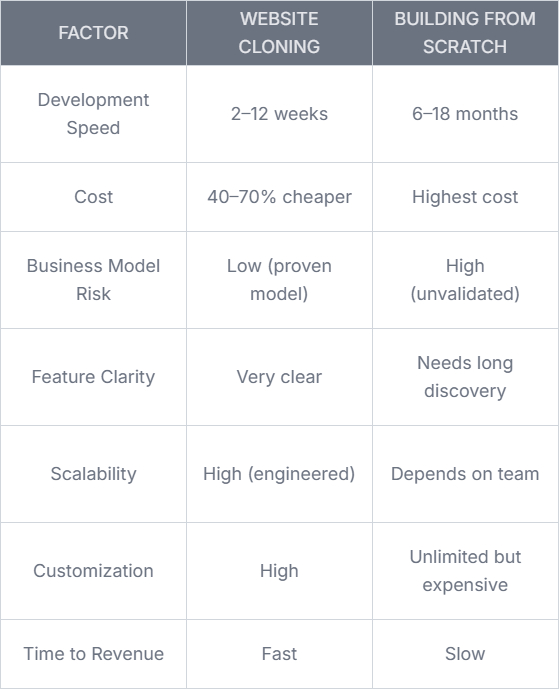
Traditional development can take 6–18 months.
Cloning cuts that timeline by 60–80% because the functional blueprint already exists.
2. Reduced Product Risk
You eliminate uncertainty around:
- User experience
- Feature prioritization
- Conversion funnels
- Core architecture
You start with what already works.
3. Cost Efficiency
Building from scratch is expensive.
Cloning reduces development cost by 40–70%, making it ideal for startups validating new verticals.
4. A Proven Revenue Model
You’re replicating platforms that already know:
- How they convert
- How they monetize
- What their customers respond to
This reduces business-model risk dramatically.
How Website Cloning Actually Works (Professional Workflow)
A legitimate cloning project is a full-build, not a shortcut.
The goal is to recreate functionality, not copy assets.
1. Business Model & Flow Analysis
Study the target platform deeply:
- Core features
- Page flows
- Buying/selling processes
- Monetization points
- Admin workflows
- API interactions
2. Requirement Mapping
Decide what you want to:
- Keep
- Modify
- Remove
- Upgrade
- Add as new features
Every clone becomes unique.
3. Custom UX/UI & Branding
Design teams create entirely original:
- Brand identity
- Layout
- UI themes
- Visual elements
Nothing is copied.
4. Custom Development
Developers rebuild the platform from scratch:
- Clean, original code
- Secure backend
- API architecture
- Scalable database structure
5. Quality Testing & Deployment
Performance, load, device, browser, and security checks.
6. Iterative Enhancement
Once launched, the clone evolves into a fully differentiated product.
What You Can Clone Today (Industries & Platforms)
Website cloning applies to nearly every digital business category:
- Marketplaces (Amazon, Etsy, Fiverr)
- Social networks (Facebook-like communities)
- Multi-vendor stores (Shopify-style)
- On-demand services (Uber-like apps)
- Delivery platforms (DoorDash, Swiggy)
- SaaS tools (Project management, CRM, LMS)
- Dating platforms (Match, Tinder style)
- Booking engines (Airbnb, Booking.com)
- Subscription platforms & membership portals
- E-learning and coaching platforms
- Content-sharing communities
If a product exists online, its business logic and workflows can be cloned legally.
Is Website Cloning Legal?
Cloning becomes illegal only if you copy: copyrighted code, UI design assets, brand elements, user databases, trademarks
A legal clone recreates functionality, not content.
Legal cloning includes:
1. Brand-new codebase
2. New UI/UX
3. Original content and media
4. Unique branding
5. Compliance with copyright & IP laws
This is why reputable companies rebuild everything from scratch.
Website Cloning vs Building From Scratch
Why a Professional Team Outperforms Freelancers in Cloning Projects
While freelancers can mimic the look of a website, they often overlook the deeper engineering foundations that make platforms scalable and reliable. A serious clone requires coordinated work across business analysts, designers, backend and frontend developers, QA specialists, and DevOps engineers. Without experienced oversight, the resulting product may struggle under real-world usage.
A professional team ensures that the final platform is not just visually similar but structurally sound capable of handling traffic, transactions, integrations, and long-term growth.
How iScripts Delivers High-Quality Custom Website Cloning
iScripts has developed a specialized Website Cloning Program tailored for entrepreneurs and businesses that want to launch platforms modeled after proven online successes. The process begins with a full study of the target platform, followed by structured requirement gathering, creative UI/UX development, and complete custom coding.
Clients receive transparent pricing, milestone-based delivery, scalable architecture, and access to a dedicated team that includes analysts, developers, designers, testers, and project managers. Whether the goal is to build a marketplace like Amazon, a dating platform like Match, a delivery app like DoorDash, or a SaaS platform with unique workflows, iScripts ensures the result is fully custom, legally compliant, and engineered for growth.
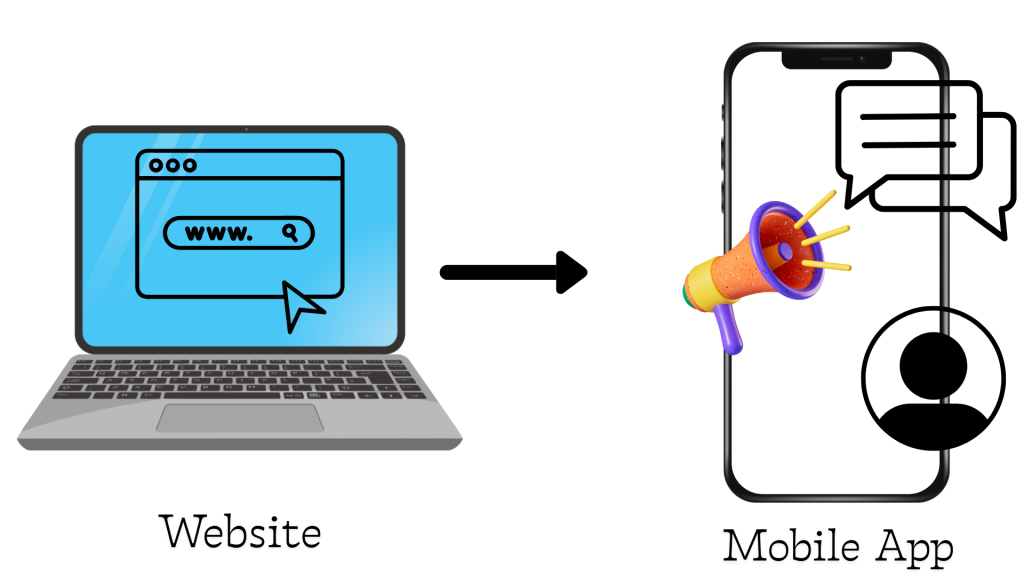
The company’s ability to clone both web and mobile applications—covering iOS, Android, backend systems, and APIs—makes it a comprehensive partner for anyone looking to launch a platform quickly without compromising long-term scalability.
FAQs
1. Is website cloning the same as copying a website?
2. How long does a website cloning project take?
3. Will Google penalize a cloned website?
4. How much does website cloning cost?
5. Can I add features not found in the original platform?
6. Is website cloning scalable?
7. Can you clone both web and mobile apps?
8. Is cloning suitable for startups?