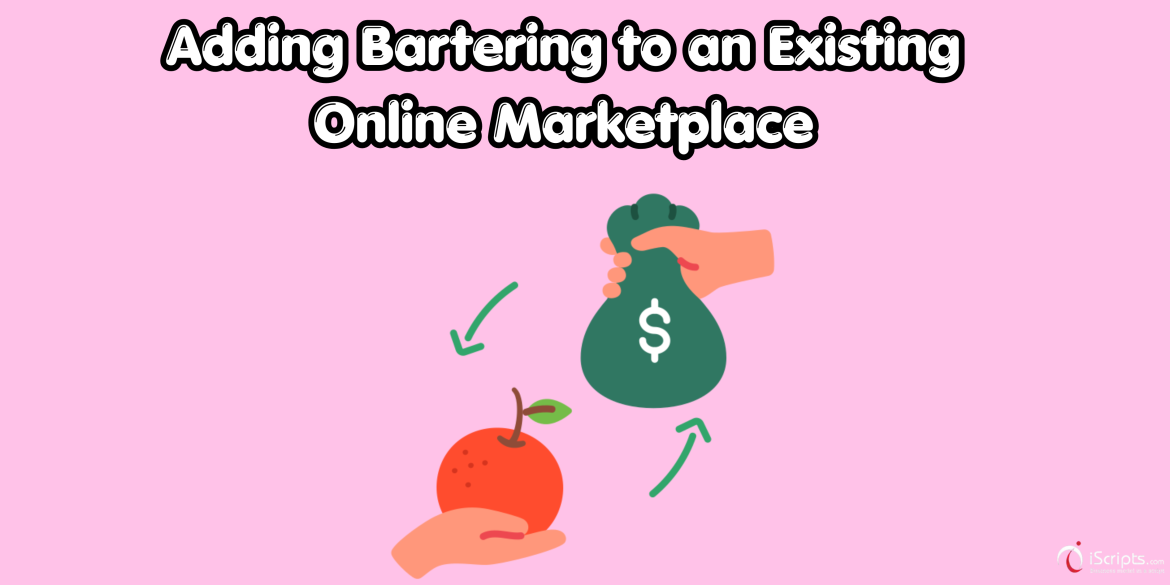
Online marketplaces traditionally focus on buying and selling products or services using money. However, adding a bartering system can give users another way to exchange value. Instead of paying the full price for an item, users can offer another product, service, or trade credit in exchange.
Adding a barter marketplace system to an existing platform can increase user participation, create new transaction opportunities, and help users make better use of products and services they already have. With the right features and a clear trading process, an existing marketplace can evolve into a flexible platform that supports both monetary transactions and barter exchanges.
What Is an Online Bartering System?
An online bartering system allows users to exchange products or services without relying entirely on traditional currency. For example, a photographer could offer a photo session in exchange for website design, while a user selling a bicycle could accept another item of similar value instead of cash.
A digital barter exchange platform organizes these transactions by providing tools for listings, trade offers, negotiations, communication, payments or credits, and transaction tracking. There are several common approaches to online bartering:
- Direct item-for-item exchanges
- Service-for-service exchanges
- Product-for-service exchanges
- Point or credit-based exchanges
- Mixed buy, sell, and barter transactions
Why Add Bartering to an Existing Marketplace?
An existing marketplace already has an important foundation: users, listings, categories, search functionality, and transaction activity. Adding a bartering system can build on this existing infrastructure rather than requiring a completely separate marketplace.
Increase Marketplace Engagement
Bartering gives users another reason to browse listings and interact with other members. Some users may not be ready to purchase an item but may have something valuable to offer in exchange.
Create More Trading Opportunities
A traditional marketplace may limit transactions to buyers who are willing to pay the listed price. A barter option expands the potential pool of participants by allowing users to negotiate alternative forms of value.
Make Better Use of Existing Products and Services
Many users own products or have skills that are no longer being used. A peer-to-peer bartering platform can help turn these unused resources into opportunities for exchange.
Support Different Types of Users
Some marketplaces serve individuals, small businesses, freelancers, and service providers. A flexible online barter marketplace can accommodate different types of exchanges based on the needs of the community.
How to Add a Bartering System to an Existing Online Marketplace?
Step 1: Define the Bartering Model
Before adding technical features, decide how the bartering system will work. A marketplace can support one or several models.
Direct Bartering
In direct bartering, one user offers an item or service in exchange for another specific item or service. For example:
User A: Offers a used camera
User B: Offers a laptop accessory
Both users agree to exchange the items.
Credit-Based Bartering
A credit-based system allows users to earn and spend virtual trade credits. This is useful when two users do not want each other’s products directly.
For example, a user can provide a service and receive 100 trade credits. Those credits can later be used to obtain another product or service from a different member.
Mixed Marketplace Model
An existing marketplace can also support buying, selling, and bartering together. Users can choose whether to purchase an item with money or make a trade offer.
This approach provides greater flexibility while keeping the original marketplace structure intact.
Step 2: Add Barter Options to Existing Listings
The existing listing system can be expanded to include barter-related information. This makes it clear which listings are available for online swapping and reduces unnecessary trade requests. Each listing could allow sellers to specify:
- Whether bartering is accepted
- Preferred items or services for exchange
- Minimum acceptable trade value
- Whether partial cash or credit is accepted
- Trade location or delivery preferences
- Availability of the listed item
Step 3: Create a Trade Offer System
A structured trade offer system is one of the most important components of a bartering marketplace. Instead of simply sending a message saying, “Would you trade this?”, users should be able to submit a formal offer. This creates a clear record of what both parties agreed to exchange. A basic trade process can include:
- User selects a listing.
- User chooses an item or service to offer.
- User adds optional cash or credits if supported.
- Seller reviews the offer.
- Seller accepts, rejects, or makes a counter-offer.
- Both parties confirm the final terms.
- The trade moves to fulfilment.
Step 4: Add Counter-Offers and Negotiation
Not every barter offer will be accepted immediately. Users may need to negotiate before reaching an agreement.
A counter-offer feature allows users to modify the proposed exchange without starting a completely new transaction.
For example, a seller may receive an offer for one item but consider the value too low. The seller could request an additional product, service, or trade credit as part of the deal.
Keeping negotiations inside the marketplace also makes the process easier to track.
Step 5: Introduce a Trade Credit or Points System
A barter credit system can solve one of the biggest challenges of direct exchanges: finding two users who want exactly what the other person offers.
For example:
- User A provides a logo design and earns 50 credits.
- User A uses those credits to obtain a used office chair.
- The office chair owner can later use the credits to obtain another product or service.
This creates a flexible exchange network where value does not always have to move directly between two users. A credit system should include accurate balance tracking, transaction history, credit transfer rules, and controls for administrators.
Step 6: Build Trust and Reputation Features
Trust is essential when users exchange products or services directly. After a successful transaction, both parties can leave feedback. Over time, this creates a reputation system that helps users identify reliable trading partners. A barter marketplace should include features such as:
- User profiles
- Ratings and reviews
- Trade history
- Verified accounts
- User reporting
- Blocking tools
- Completed trade indicators
Step 7: Add Secure Communication
Bartering usually involves more discussion than a standard purchase. Users may need to discuss product condition, service requirements, delivery arrangements, or trade value.
An integrated messaging system allows users to communicate without immediately moving conversations outside the marketplace. Useful communication features include:
- Private messaging
- Trade-specific conversations
- Notifications
- Offer updates
- Acceptance and rejection alerts
- Conversation history.
Step 8: Create a Clear Trade Fulfilment Process
Once an offer is accepted, the platform should guide both parties through the exchange.
A simple workflow could be:
Offer Sent → Offer Accepted → Trade Confirmed → Item or Service Delivered → Completion Confirmed → Review Submitted
For physical products, the platform can support shipping information, delivery confirmation, or pickup arrangements. For services, the workflow can include service milestones or completion confirmation. A structured process helps reduce confusion and makes the barter transaction easier to manage.
Step 9: Add Dispute Resolution
Barter transactions can sometimes result in disagreements. An item may not match its description, a service may not be completed as agreed, or one party may fail to fulfil the trade. Clear rules should be established before the system launches so users understand what happens when a trade goes wrong. A dispute resolution system can provide:
- Trade cancellation requests
- Issue reporting
- Evidence submission
- Admin review
- Refund or credit adjustments where applicable
- User warnings or account restrictions
Step 10: Consider Escrow for Higher-Value Trades
For higher-value exchanges, an escrow-style process can provide additional protection.
Instead of immediately releasing funds or trade credits, the system can temporarily hold the value until agreed conditions are met.
For example:
Trade Confirmed → Value Held → Delivery/Service Completed → Confirmation → Value Released
This approach can help reduce risk and increase confidence in the online barter system, particularly when users are unfamiliar with one another.
Step 11: Update Search and Matching Features
Adding bartering should not make it harder for users to find products. Existing marketplace search can be expanded with filters such as:
- Available for barter
- Product category
- Service category
- Trade value
- Location
- New or used
- Preferred exchange type
A matching system can also help identify listings that may be suitable for a user’s offer or requested item. Better discovery increases the chances of successful exchanges and keeps the barter marketplace active.
Step 12: Give Administrators Control
An effective barter exchange platform needs strong administrative controls. Administrators should be able to manage:
- Users and accounts
- Product and service listings
- Categories
- Trade requests
- Trade credits
- Disputes
- Reports and complaints
- Reviews
- Fees and commissions
- Platform activity
Analytics can also help administrators understand which categories receive the most barter activity and where users are abandoning the trading process.
Common Challenges When Adding Bartering
Adding bartering to an existing marketplace can create new opportunities, but several challenges need to be considered:
-
Valuing Different Items
Unlike fixed-price purchases, barter transactions may involve subjective values. Clear descriptions, negotiation tools, trade credits, and user-defined conditions can help address this challenge.
-
Maintaining Trust
Users need confidence that listings are accurate and other members will fulfil agreed trades. Verification, ratings, reviews, and dispute management can strengthen trust.
-
Preventing Fraud
Fake listings, misleading descriptions, and dishonest users can damage a marketplace. Moderation tools, reporting systems, transaction records, and account controls can help reduce these risks.
-
Maintaining Marketplace Liquidity
A barter system works best when users have enough relevant products and services to choose from. Encouraging more listings and making trade opportunities easy to discover is important for maintaining activity.
Best Practices for Adding a Bartering System
A successful online bartering platform should make the exchange process simple without disrupting the existing marketplace experience.
Some important practices include:
- Keep buying, selling, and bartering within the same user experience
- Clearly label listings that accept barter offers
- Provide structured trade offers instead of relying only on messaging
- Allow counter-offers and negotiations
- Use credits when direct exchanges are difficult
- Build ratings and reputation into the trading process
- Provide clear transaction and dispute workflows
- Monitor suspicious activity
- Make trade terms visible before confirmation
- Track every completed exchange
Final Thoughts
Adding a bartering system to an existing online marketplace can transform a traditional buy-and-sell platform into a more flexible peer-to-peer exchange marketplace. Direct swaps, trade credits, counter-offers, reputation systems, secure communication, and structured transaction workflows can give users more ways to exchange products and services.
The key is to integrate bartering into the existing marketplace rather than treating it as a completely separate system. With a simple user experience, clear trading rules, strong trust features, and effective administrative controls, an existing marketplace can support a broader range of transactions while creating more opportunities for users to exchange value.