
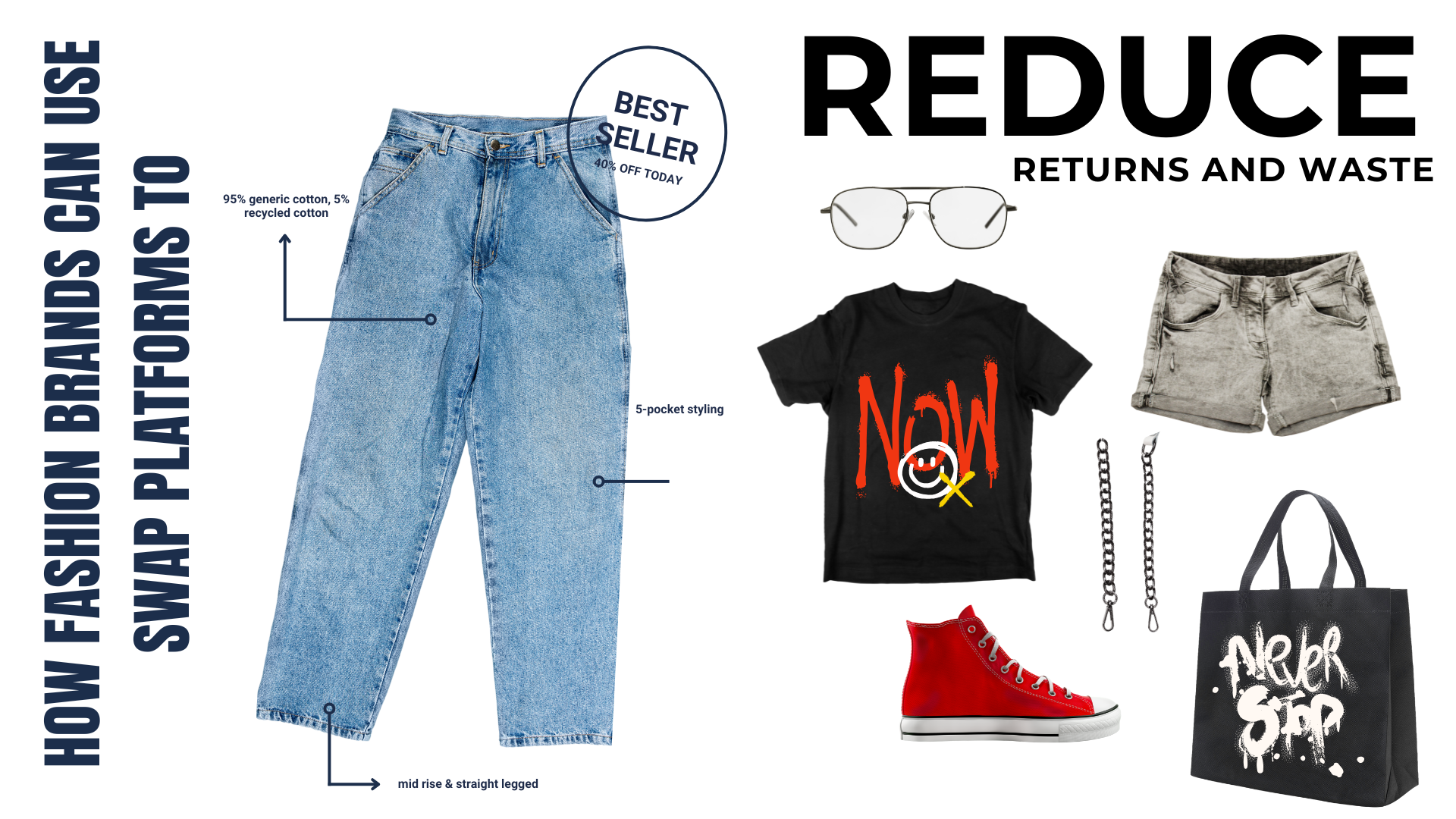
Fashion ecommerce has one of the highest return rates across industries, often ranging between 20 percent and 40 percent depending on category. Every return triggers reverse logistics, quality checks, repackaging, and in many cases, inventory loss.
The result is not just operational inefficiency but a direct hit to profitability and sustainability goals.
Most brands attempt to solve this with discounts, stricter return policies, or resale channels. These approaches either reduce margins or fail to address the root problem.
Swap platforms introduce a different model. Instead of reversing a transaction, they retain value within the ecosystem by enabling exchanges.
What Is a Swap Platform in Fashion
A swap platform allows users to exchange products instead of returning them. In a fashion context, this can be implemented as:
- Customer to customer exchanges
- Brand managed swap ecosystems
- Credit based or token based systems
Instead of issuing refunds, the platform facilitates value retention through redistribution of products.
A fashion swap platform is a system that enables customers to exchange purchased items instead of returning them, reducing refunds and keeping inventory in circulation.
The Real Cost of Returns in Fashion
Returns are not just a logistics issue. They impact multiple areas of the business:
Financial impact
- Reverse logistics costs can reach 20 to 30 percent of product value
- Returned items often cannot be resold at full price
- Inventory depreciation reduces margins
Operational impact
- Increased warehouse handling
- Inventory forecasting challenges
- Higher operational complexity
Environmental impact
- Increased carbon emissions from shipping
- Textile waste due to unsellable returns
Fashion returns reduce profit margins, increase operational costs, and contribute significantly to environmental waste.
Why Traditional Solutions Fail to Solve Returns
Discounts and aggressive sales
These reduce return rates slightly but erode margins significantly.
Strict return policies
They improve short term cost control but negatively impact customer experience and conversion rates.
Resale platforms
They help recover value but are slow, fragmented, and often disconnected from the original purchase journey.
Core issue
All these solutions treat returns as an endpoint, not as part of a continuous value cycle.
How Swap Platforms Reduce Returns
Swap platforms change the flow from refund to exchange.
1. Post Purchase Swap Option
Instead of returning an item, customers can swap it for another product.
This:
- Eliminates refund processing
- Retains revenue within the platform
- Reduces logistics overhead
2. Size and Style Flexibility
Fit issues are one of the biggest drivers of returns.
Swapping allows:
- Size corrections without refunds
- Style changes without loss of revenue
3. Peer to Peer Matching
Customers can exchange items directly with others who want them.
This:
- Reduces dependency on centralized inventory
- Speeds up exchange cycles
- Improves product utilization
4. Credit Based Exchanges
Users receive credits instead of refunds, which can be used for future swaps.
This ensures:
- Revenue retention
- Increased repeat engagement
Business Impact: Returns vs Swap Model
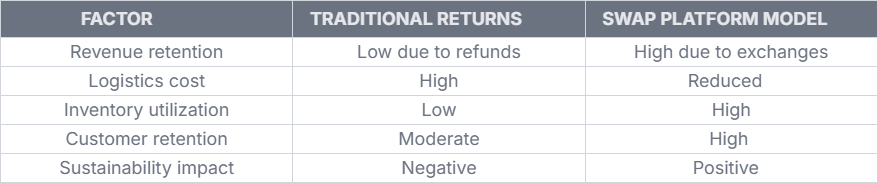
Swap platforms convert returns from a cost center into a value retention mechanism.
Strategic Benefits for Fashion Brands
1. Improved Profit Margins
By reducing refunds and increasing product reuse, brands retain more revenue per transaction.
2. Higher Customer Lifetime Value
Customers who engage in exchanges are more likely to stay within the ecosystem and make repeat interactions.
3. Stronger Brand Positioning
Sustainability is no longer optional. Swap platforms align brands with circular economy trends without compromising revenue.
4. Reduced Inventory Risk
Unsold or returned inventory can be redistributed instead of liquidated.
Implementation Models for Fashion Brands
Brand Owned Swap Platform
A dedicated ecosystem where customers exchange products within the brand environment.
Best for:
- Established brands
- Strong customer base
Marketplace Integration
Adding swap functionality within an existing ecommerce platform.
Best for:
- Brands testing the concept
- Lower upfront investment
Hybrid Community Model
Combining brand inventory with peer to peer exchanges.
Best for:
- Scaling engagement
- Building community driven commerce
Revenue Opportunities Within Swap Platforms
Swap platforms are not just cost reduction tools. They also create new revenue streams:
- Transaction fees on exchanges
- Premium memberships for faster swaps or visibility
- Featured listings for high demand products
- Credit conversion fees
Swap platforms generate revenue through transaction fees, premium features, and increased customer retention.
Challenges and How to Overcome Them
Trust and quality control
Solution: verification systems, user ratings, and escrow mechanisms
Platform adoption
Solution: incentivize early users with credits or reduced fees
Logistics coordination
Solution: integrate shipping workflows or enable local exchanges
User experience complexity
Solution: keep the swap process simple and intuitive
Step by Step Implementation Strategy
Step 1: Identify return patterns
Analyze why customers return products. Focus on high frequency issues like sizing.
Step 2: Define swap mechanics
Decide whether swaps will be direct, credit based, or hybrid.
Step 3: Choose platform approach
Build or adopt a solution that supports exchange workflows and monetization.
Step 4: Launch with a focused audience
Start with a specific segment to build initial liquidity.
Step 5: Optimize and scale
Use data to refine matching, pricing, and user experience.
The Future of Fashion Commerce Is Circular
The shift from ownership to access is already underway. Consumers are becoming more value conscious and sustainability aware.
Swap platforms align with both trends by:
- Extending product lifecycle
- Reducing waste
- Increasing engagement
Brands that adopt this model early can turn a major operational problem into a long term competitive advantage.
Turning Returns Into a Scalable Growth Opportunity
Returns will always exist in fashion. The difference lies in how brands handle them.
Swap platforms offer a structural shift from refund based systems to value retention ecosystems. They reduce costs, improve customer experience, and unlock new revenue opportunities at the same time.
Implementing such a model requires more than just a feature. It requires a platform capable of handling exchanges, user matching, credit systems, and monetization without adding operational complexity. Solutions like iScripts eSwap enable brands to build and manage swap driven marketplaces with flexibility, making it easier to experiment with circular commerce models while maintaining control over user experience and revenue streams.
FAQs
How can fashion brands reduce return rates
What is a swap platform in ecommerce
Are swap marketplaces profitable
How does swapping reduce waste in fashion
