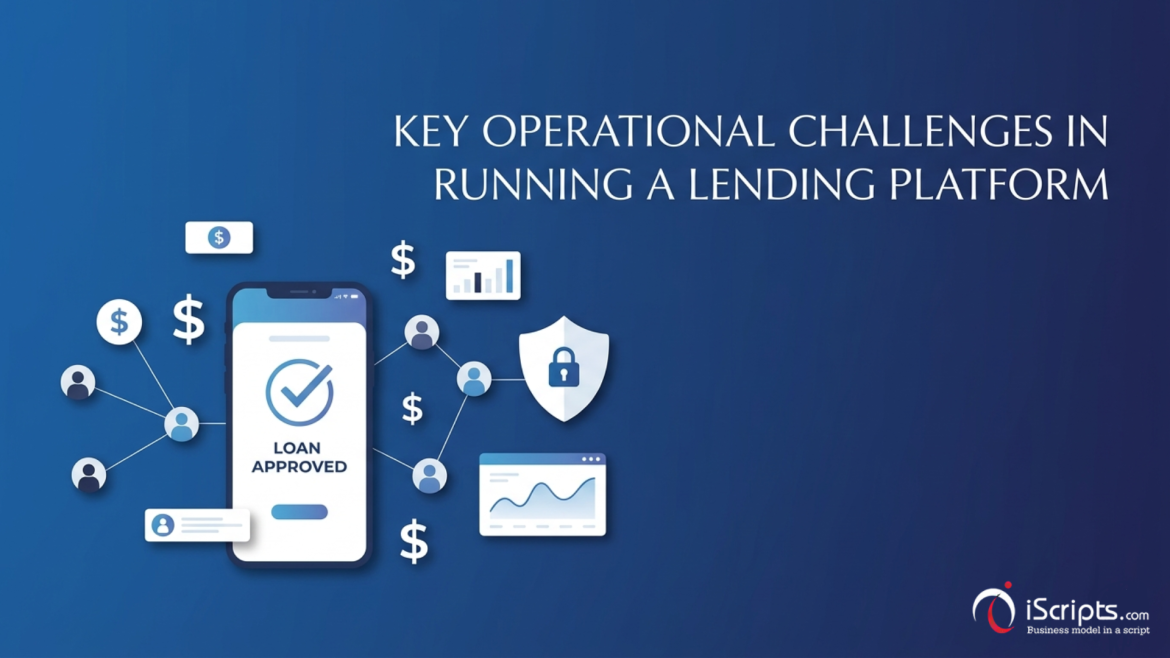
The lending industry has changed significantly with the rise of online lending platforms. Because digital lending offers quicker approvals, straightforward application procedures, and simpler access to financial services, many borrowers and investors now favor it over traditional banks. Peer-to-peer lending and personal loans are two examples of how digital platforms are improving user convenience in lending.
However, creating a website or mobile application is only one aspect of managing a lending platform. In order to handle borrower verification, payment processing, compliance requirements, fraud detection, and customer assistance, strong operational management is essential. Even with cutting-edge technology, ineffective operations can lead to delays, security threats, and problems with consumer confidence.
Every day, lending platforms also have to cope with a variety of hazards and continuous procedures. Companies need to handle loan defaults, protect data, adhere to financial standards, and guarantee seamless platform operation. In this article, we will examine the main operational issues that lending platforms encounter and talk about how companies can successfully resolve them.
2. What Is a Digital Lending Platform?
A digital lending platform is an online system that facilitates loan applications for borrowers and enables financial institutions or lenders to deliver funding using digital procedures. Users can finish applications, submit paperwork, and manage loans online rather than going to a physical bank location. These platforms facilitate quicker, simpler, and more accessible lending for both lenders and borrowers.
These days, there are many different types of digital lending platforms. Peer-to-peer (P2P) lending systems enable direct communication between lending investors and individual borrowers. By putting customers in touch with many lenders or financial providers, marketplace lending platforms expand their borrowing possibilities. Customers can make purchases and pay for them over time in installments via Buy Now Pay Later (BNPL) services. Giving small loans to individuals or small businesses that might not have access to traditional banking services is the main objective of microfinance platforms.
Digital lending platforms act as a middleman between lenders and borrowers by managing applications, loan approvals, payments, and communication via a single system. Since these platforms handle sensitive customer data and financial transactions, operational efficiency is essential. Efficient operations enable lowering delays, improving customer happiness, managing risks, and preserving the security and dependability of the platform.
3. Major Operational Challenges in Lending Platforms
3.1 Regulatory Compliance & Legal Requirements
One of the biggest operational challenges for lending platforms is managing legal and regulatory requirements. Since lending involves financial transactions and user data, platforms must follow strict rules and regulations.
- Financial Regulations
Lending platforms must follow government financial rules to operate legally and avoid penalties. - KYC and AML Compliance
Platforms need to verify customer identities through Know Your Customer (KYC) processes and prevent illegal financial activities through Anti-Money Laundering (AML) checks. - Regional Licensing Issues
Different countries and regions have different lending laws and licensing requirements. Expanding to new markets can become complex and time-consuming. - Data Privacy Laws
Lending platforms collect sensitive financial and personal information. They must follow data protection laws to keep user information safe and secure. - Cross-Border Challenges
Platforms operating internationally may face currency regulations, tax policies, and compliance differences across countries.
One major challenge is that regulations frequently change. Lending platforms must constantly update their policies, systems, and compliance processes to stay legally compliant and avoid operational risks.
3.2 Borrower Risk Assessment
Another major challenge for lending platforms is evaluating borrower risk accurately. Before approving a loan, platforms must determine whether the borrower can repay the amount on time. Poor risk assessment can lead to payment defaults and financial losses.
- Credit Scoring Difficulties
Some borrowers may have low credit scores or no proper credit records, making it difficult to evaluate their financial reliability. - Limited Financial History
New borrowers or small businesses may not have enough financial history for proper assessment. This increases uncertainty during loan approvals. - Fraud Detection
Lending platforms must identify fake applications, stolen identities, and false financial information to prevent fraud. - AI-Driven Underwriting
Many platforms now use artificial intelligence and automated systems to analyze borrower data, spending patterns, and repayment ability more quickly.
One of the biggest challenges is balancing approval speed with risk management. Users expect fast loan approvals, but platforms must also carefully verify borrower information to reduce financial risks and avoid bad loans.
3.3 Loan Default & Risk Management
Managing loan defaults is one of the biggest operational challenges for lending platforms. Some borrowers may fail to repay loans on time, which can affect platform revenue and investor confidence. Proper risk management is important to reduce financial losses and maintain platform stability.
- Non-Performing Loans
Loans that are not repaid within the agreed time period become non-performing loans. A high number of unpaid loans can create serious financial risks for the platform. - Collection Strategies
Lending platforms need effective collection methods to recover overdue payments. This may include follow-up calls, repayment plans, or collection agencies. - Automated Reminders
Many platforms use automated email, SMS, or app notifications to remind borrowers about upcoming or missed payments. This helps improve repayment rates. - Risk Diversification
Platforms reduce risk by spreading loans across multiple borrowers instead of depending heavily on a small group of users. This helps minimize the impact of loan defaults.
Strong risk management strategies help lending platforms maintain healthy cash flow, protect investors, and improve long-term operational stability.
3.4 Investor & Lender Management
Managing investors and lenders is another important operational challenge for lending platforms. Since lenders provide the funds for loans, platforms must maintain trust and ensure smooth communication and financial management.
- Building Lender Trust
Investors and lenders need confidence that the platform is secure, reliable, and capable of managing loans properly. Clear communication and consistent performance help build trust. - Portfolio Transparency
Lenders expect visibility into how their money is being used. Platforms should provide detailed reports on loan performance, repayments, risks, and returns. - Return Expectations
Different investors may expect different levels of returns. Managing these expectations while balancing borrower risk can be challenging for lending platforms. - Fund Allocation Management
Platforms must efficiently distribute funds across multiple borrowers while reducing financial risks and avoiding overexposure to specific loan categories.
Proper investor and lender management helps improve platform credibility, attract more funding, and support long-term business growth.
3.5 Payment Processing & Cash Flow Management
Managing payments and maintaining smooth cash flow is a major operational challenge for lending platforms. Since lending platforms handle regular loan payments and financial transactions, even small payment issues can affect both borrowers and lenders.
- EMI Collections
Platforms must collect monthly loan payments on time. Missed or delayed EMI payments can affect cash flow and increase the risk of loan defaults. - Payment Gateway Failures
Technical problems with payment gateways can interrupt transactions and create frustration for users. Failed payments may also delay loan repayments and fund transfers. - Delayed Settlements
Sometimes payments between borrowers, lenders, and the platform may take longer to process. Delayed settlements can affect user trust and financial operations. - Multi-Currency Transactions
Platforms operating in different countries may need to handle multiple currencies and international payments. Managing exchange rates and transaction fees can become complicated.
Efficient payment processing systems help lending platforms maintain stable cash flow, improve user experience, and reduce financial disruptions.
3.6 Fraud Prevention & Security
Fraud prevention and security are critical for every lending platform. Since these platforms handle sensitive financial and personal information, they are often targeted by fraudsters and cybercriminals. Strong security systems are important to protect users, transactions, and platform operations.
- Identity Fraud
Some users may use stolen or fake identity documents to apply for loans. Platforms must verify user information carefully before approving applications. - Fake Borrowers
Fraudsters may create false borrower profiles using fake details to obtain loans without any intention of repayment. - Account Takeovers
Hackers may try to gain access to user accounts through stolen passwords or phishing attacks. This can lead to unauthorized transactions and financial losses. - Cybersecurity Threats
Lending platforms can face threats such as data breaches, malware attacks, and hacking attempts that may expose sensitive customer information.
To reduce these risks, lending platforms use security measures such as identity verification, encryption, multi-factor authentication, and fraud detection systems. Strong security practices help build user trust and protect the platform from financial and legal problems.
3.7 Technology Infrastructure & Scalability
A strong technology infrastructure is essential for the smooth operation of a lending platform. As the number of users and transactions increases, the platform must be able to handle growing demand without affecting performance or security.
- Platform Uptime
Lending platforms should remain available at all times. Server downtime or technical issues can interrupt loan applications, payments, and user access. - Handling User Growth
As more borrowers and lenders join the platform, the system must manage higher traffic, larger databases, and increased transactions efficiently. - API Integrations
Lending platforms often connect with payment gateways, credit scoring systems, identity verification services, and banking systems through APIs. Managing these integrations properly is important for smooth operations. - Cloud Scalability
Many platforms use cloud technology to expand resources when user demand increases. Cloud scalability helps platforms maintain performance during high traffic periods.
A scalable and reliable technology infrastructure helps lending platforms provide better user experiences, reduce technical problems, and support long-term business growth.
3.8 Customer Experience & Support
Providing a smooth customer experience is very important for lending platforms. Users expect simple applications, quick approvals, and reliable support throughout the lending process. Poor user experience can lead to customer dissatisfaction and lower platform growth.
- Loan Onboarding Friction
Complicated registration steps, lengthy forms, or too many document requirements can make the loan application process difficult for users. - Approval Delays
Slow verification or approval processes may frustrate borrowers who expect quick access to funds. - Dispute Handling
Lending platforms must manage customer complaints, payment disputes, and transaction issues quickly and professionally to maintain trust. - Retention Challenges
Keeping users engaged can be difficult when competitors offer better rates, faster approvals, or improved user experiences.
Strong customer support and user-friendly processes help lending platforms improve customer satisfaction, build trust, and increase long-term user retention.
Running a lending platform involves managing several operational challenges at the same time. From regulatory compliance and risk assessment to payment processing, fraud prevention, and customer support, every process plays an important role in maintaining platform stability and user trust. Even a small issue in operations can affect borrower experience, investor confidence, and overall business performance. By building strong operational systems, using secure technology, and improving customer experience, lending platforms can reduce risks, improve efficiency, and support long-term business growth.
4. Operational Costs and Resource Management
Running a lending platform involves several operational costs and resource management challenges. To maintain seamless operations and provide dependable services, businesses must invest in compliance, technology, customer support, and platform management. Careful cost planning is necessary to sustain long-term growth and profitability.
1. Compliance and Regulatory Costs
Lending platforms must adhere to financial regulations, including AML (Anti-Money Laundering) and KYC (Know Your Customer) requirements. This involves investment in legal support, verification systems, data security measures, and regular system updates to ensure compliance.
2. Customer Acquisition Expenses
Attracting borrowers and investors requires continuous marketing efforts. This includes advertising campaigns, promotional strategies, and digital outreach. In highly competitive markets, customer acquisition costs can be significant.
3. Technology Maintenance and Infrastructure
Ongoing technical upkeep is essential for platform stability. Costs include software updates, cybersecurity enhancements, server maintenance, and system monitoring. As the platform scales, infrastructure expenses also increase.
4. Customer Support Operations
Dedicated support teams are required to handle user queries, payment issues, disputes, and technical difficulties. Efficient customer service improves trust, satisfaction, and long-term user retention.
5. Automation and Process Optimization
Many lending platforms use automation for loan processing, fraud detection, reminders, and verification processes. While automation reduces manual workload and improves efficiency, human involvement is still necessary for complex decisions and customer interactions.
6. Balancing Costs for Sustainable Growth
A successful lending platform requires careful financial planning. Balancing operational costs with efficient resource management is essential to ensure long-term stability, scalability, and profitability.
Building a sustainable and successful lending platform requires striking a balance between operating costs and effective resource management.
5. How Successful Lending Platforms Overcome These Challenges
Successful lending platforms combine state-of-the-art technology and clever operating strategies to reduce risks, increase efficiency, and improve customer experiences. Instead of performing everything by hand, many platforms are depending more and more on automation and data-driven solutions to streamline daily operations.
Using automation tools is one of the best solutions. Tasks like loan applications, payment reminders, document verification, and client communication are all made easier by automated systems. This increases operational speed, saves time, and minimizes manual labor.
In order to assess borrowers more precisely, many platforms also employ AI-based risk assessment. In order to detect high-risk borrowers and lower loan defaults, artificial intelligence can examine financial behavior, payback history, and expenditure habits. This facilitates quicker and more intelligent financing decisions for platforms.
Smart analytics is another crucial answer. Analytics technologies are used by lending platforms to monitor user activity, loan performance, repayment patterns, and financial hazards. Businesses may make better decisions and maximize platform performance with the aid of these information.
Additionally, workflow automation aids in streamlining intricate operational procedures. Workflows that have been predetermined can handle tasks like loan approvals, compliance checks, and payment processing automatically. This lowers human mistakes and increases efficiency.
In order to enhance their services, numerous lending platforms also rely on partner integrations. Platforms can provide quicker and more secure operations by integrating with payment gateways, credit scoring systems, identity verification companies, and banking services.
By combining automation, artificial intelligence, analytics, and strategic integrations, successful lending platforms can reduce operational challenges, improve customer happiness, and achieve long-term business growth.
6. Future Trends in Lending Platform Operations
With the introduction of new technology and more intelligent financial systems, lending platforms are always changing. Businesses are implementing cutting-edge solutions to boost productivity, lower risks, and give customers speedier services as digital lending expands.
1. AI-Powered Credit Scoring
Lending platforms are increasingly using artificial intelligence to evaluate borrower eligibility. Instead of relying solely on traditional credit scores, AI analyzes spending behavior, repayment history, and financial patterns to enable faster and more accurate lending decisions.
2. Open Banking Integration
Open banking allows lending platforms to securely connect with users’ bank accounts through APIs. This improves income verification, transaction analysis, and loan approval processes, making lending faster and more efficient.
3. Embedded Finance Solutions
Embedded finance enables lending services to be integrated directly into apps, e-commerce platforms, and digital marketplaces. Users can access loans or installment payment options without leaving the platform they are using.
4. Alternative Data-Based Lending
Lenders are increasingly using non-traditional data sources such as utility bill payments, mobile usage patterns, and digital transaction history. This helps assess borrowers who may lack formal credit history.
5. Blockchain-Based Verification
Blockchain technology is being adopted to enhance transparency, security, and fraud prevention. It ensures secure identity verification and creates tamper-proof financial transaction records.
6. Shift Toward Automation and Smart Lending
The overall direction of lending platforms is moving toward automation, intelligent risk assessment, improved user experience, and stronger financial security systems.
These trends show that the future of lending platforms will focus on automation, smarter risk analysis, better user experiences, and stronger financial security.
7. Key Considerations Before Launching a Lending Platform
Launching a lending platform requires careful planning and a clear business strategy. Before starting, businesses must understand their target users, operational risks, legal requirements, and long-term growth plans. Proper planning helps reduce future challenges and improves the chances of building a successful platform.
One important factor is identifying the target borrower segment. Some platforms focus on personal loans, while others serve small businesses, students, or specific industries. Understanding the needs and financial behavior of the target audience helps businesses design better lending services.
Another major consideration is risk tolerance. Every lending platform faces the risk of loan defaults and financial losses. Businesses must decide how much risk they are willing to handle and create proper risk management strategies before approving loans.
Compliance readiness is also very important. Lending platforms must follow financial regulations, data protection laws, and verification requirements in the regions where they operate. Businesses should ensure they have the proper systems and legal support in place before launching.
Choosing the right monetization model is another key decision. Platforms may earn revenue through interest rates, service fees, subscription plans, transaction charges, or a combination of multiple models. The revenue strategy should align with the platform’s business goals and target market.
Finally, businesses must focus on scalability planning. As the platform grows, it should be able to handle more users, transactions, and operational processes without affecting performance or security. Building a scalable platform from the beginning helps support long-term growth and future expansion.
8. Conclusion
Running a successful lending platform requires much more than offering loans online. Businesses must manage regulatory compliance, borrower risk assessment, fraud prevention, payment processing, customer support, and technology infrastructure while maintaining smooth operations and user trust. As the digital lending industry continues to grow, operational efficiency becomes one of the most important factors for long-term success.
Modern lending platforms are now using automation, artificial intelligence, analytics, and secure integrations to simplify operations and improve customer experiences. At the same time, future trends such as AI credit scoring, open banking, embedded finance, and blockchain verification are reshaping how digital lending platforms operate and scale.
For businesses planning to enter the lending industry, choosing the right technology solution is essential. A reliable platform can help reduce operational complexity, improve security, and support long-term business growth.
Turn Your Fintech Idea Into a Lending Platform
Build a secure and scalable peer-to-peer lending platform with powerful features for borrower management, lender management, payment processing, and risk control. With iScripts SocialWallet, you can launch your digital lending business faster and create a seamless experience for both borrowers and investors.
 Step Into the Future of Peer-to-Peer Lending