
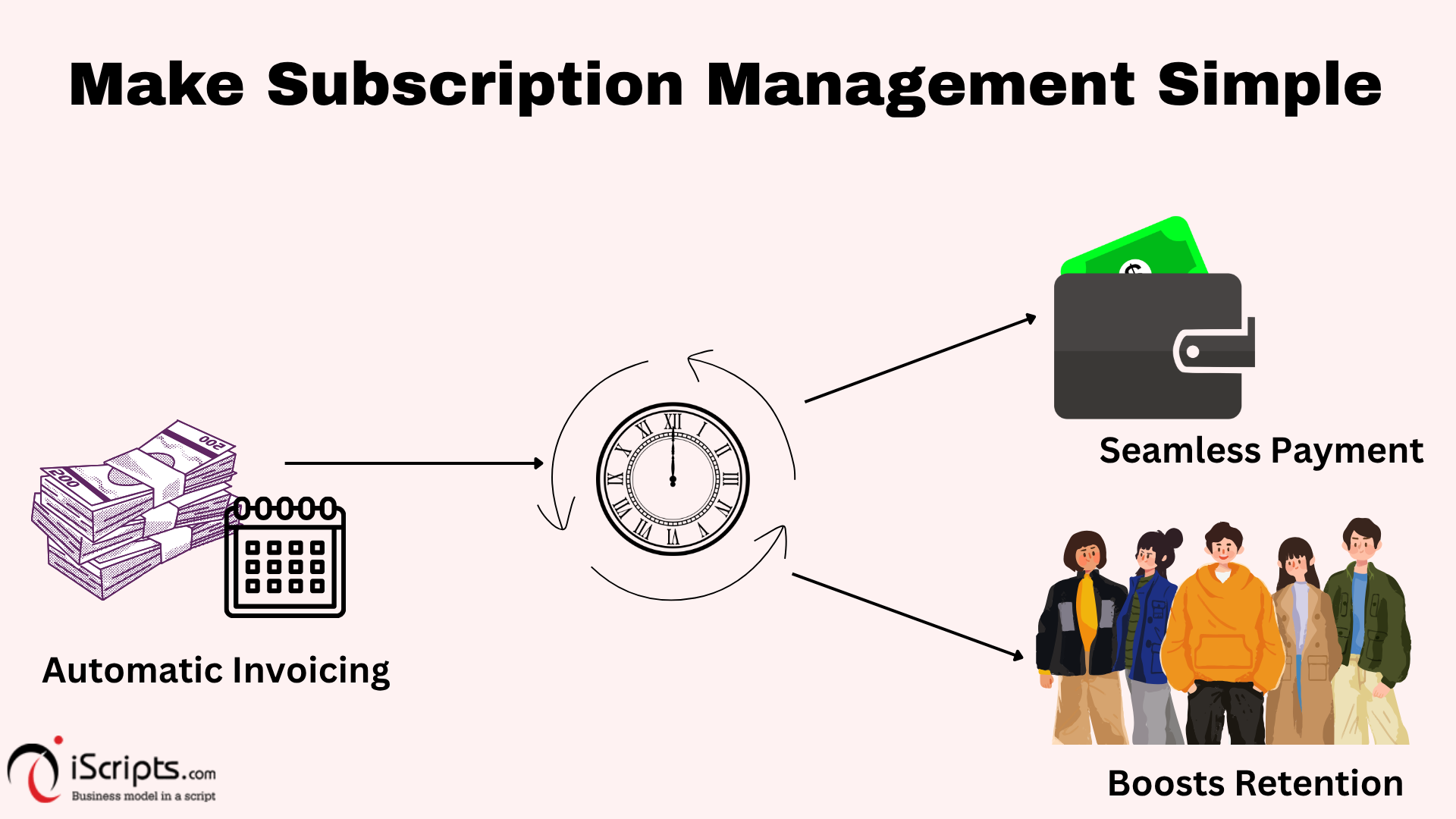
From SaaS platforms to delivery services, subscriptions are now the backbone of predictable revenue. As companies switch from one-time sales to recurring payment models that provide consistent revenue and improved client relationships, the subscription economy is expanding rapidly. Customers now prefer flexible monthly or annual payments over hefty one-time expenditures, which makes services more easy and accessible. However, tracking renewals, dealing payment issues, upgrading plans, and effectively maintaining client data are just a few of the difficulties that come with manually managing subscriptions for organizations.
In this guide, readers will learn how the subscription economy operates, why recurring payments are taking the place of traditional purchase models, the typical issues that companies have with manual management, and how more intelligent subscription solutions can streamline operations and promote long-term company success.
2. Understanding Subscription-Based Business Models and Their Business Impact
A subscription model is a pricing method where customers pay a fixed amount regularly such as monthly or yearly to continue accessing a product or service. Instead of buying something once, customers subscribe for ongoing usage, updates, or services. This model focuses on building long-term relationships with customers while providing businesses with consistent income over time.

Picture Showing various Subscription Platforms
Examples of Subscription-Based Businesses
- SaaS products
- OTT platforms
- Fitness memberships
- Logistics & service platforms
- Ecommerce subscriptions
Predictable recurring revenue lets subscription-based organizations arrange their budgets more reliably. Businesses benefit from improved customer retention and higher long-term engagement when clients continue to subscribe over time. Stable revenue sources facilitate financial forecasting, enabling more intelligent business choices and expansion strategies. Additionally, automated renewals and continuous services provide customers with a more seamless experience. Automated billing processes also increase overall operational efficiency, minimize payment errors, and lessen manual labor.
3. Key Features of a Modern Subscription Management System
A strong subscription system should simplify payments, improve customer experience, and reduce manual work. Here are the essential features explained in simple terms:
- Automated Recurring Billing : Automatically charges customers based on their billing cycle (monthly, yearly, etc.), so businesses don’t need to send invoices manually every time.
- Flexible Pricing Plans : Allows businesses to offer different plans such as basic, premium, pay-as-you-go, or custom pricing based on customer needs.
- Trial Management : Supports free trials or limited-time access, helping users experience the service before committing to a paid subscription.
- Easy Upgrade & Downgrade Handling : Customers can switch plans anytime without hassle, and the system automatically adjusts billing and access levels.
- Smart Invoicing : Generates professional invoices automatically with accurate pricing, taxes, and payment details.
- Payment Retries & Dunning Management : If a payment fails, the system retries automatically and sends reminders to customers, helping reduce subscription cancellations.
- Multiple Payment Methods : Supports various payment options like credit cards, debit cards, digital wallets, and online payment gateways for customer convenience.
- Tax & Compliance Automation : Automatically calculates taxes based on location and ensures billing follows local regulations and compliance standards.
- Real-Time Reporting : Provides live insights into revenue, active subscribers, churn rate, and payment performance for better decision-making.
4. Common Challenges Businesses Face
Running a subscription-based business sounds simple, but managing payments and customers behind the scenes can become complicated without the right system. Growth and customer satisfaction are significantly impacted by the frequent operational and financial difficulties that many organizations experience.
-> Manual Invoicing Errors
Errors are nearly inevitable when creating invoices by hand. Customers may become irate and cash flow may be impacted by incorrect invoicing amounts, overlooked bills, or late payments. Additionally, manual procedures take up time that teams may use for business expansion rather than tedious administrative tasks.
-> Failed Payments
One of the main issues subscription businesses face is payment failures. Bank transactions are rejected, cards expire, or payment restrictions are reached. Businesses run the danger of losing money even when customers wish to keep using the service if they don’t have automated retry systems and reminders.
-> Subscription Cancellations
For a variety of reasons, including unclear billing, payment problems, a lack of reminders, or a bad user experience, customers may decide to cancel their subscriptions. Unpredictable business growth is caused by high cancellation rates, which also directly lower recurring revenue.
-> Managing Multiple Payment Gateways
In order to accommodate customer preferences, businesses that serve several regions frequently require multiple payment channels. Managing many platforms concurrently can become complicated, resulting in problems with reporting, reconciliation, and operational effort.
-> Currency & Tax Complications
Different currencies, local tax laws, and compliance requirements present difficulties when selling services internationally. Manually managing local laws, GST/VAT computations, and exchange rates raises the possibility of mistakes and legal issues.
-> Customer Churn
When users gradually stop utilizing a service, it’s known as customer churn. Without effective engagement, flexible billing alternatives, or money collection tactics, companies risk losing devoted clients without knowing why.
-> Lack of Payment Analytics
Lack of clear insights regarding payment performance causes many businesses to struggle. It is challenging to monitor revenue patterns, comprehend consumer behavior, or spot issues like recurring payment failures or dwindling subscriptions without comprehensive analytics.
5. How Automation Simplifies Subscription Payments
Businesses can see how everything goes smoothly in the background from the time a consumer signs up until they renew or cancel by understanding the subscription workflow. This is a basic explanation of the average lifecycle.
Customer Subscribes : When a client selects a subscription plan and registers for the service, the procedure starts. They choose a billing schedule, such as monthly or annual, and enter their payment information. The system generates a subscriber profile and immediately activates the service after confirmation.
Automatic Billing Setup : The software automatically plans subsequent payments based on the chosen billing period following subscription. This eliminates the need for repeated payment requests or human follow-ups. While the system handles billing automatically, the customer remains enrolled.
Payment Processing : The system safely completes the payment through the chosen payment gateway on the billing date. The saved payment method is used to automatically charge the amount, guaranteeing the customer’s continuous service access.
Invoice Generation : An invoice is automatically generated and emailed to the customer upon completion of payment. In order to maintain transparent and well-organized records, this invoice contains billing details, taxes, payment confirmation, and subscription information.
Renewal Reminders : Customers may be notified about impending renewals prior to the next paying period. These notifications allow clients time to change their payment information if necessary, lessen surprises, and increase trust.
Renewal Success or Failure Handling : The subscription automatically renews without the customer’s involvement if the payment is successful. The system tries the transaction again and sends warnings asking for new payment details if the payment is unsuccessful. This preserves a good client experience while assisting in revenue recovery.
Choosing the Right Payment Infrastructure
For any subscription-based business to succeed, choosing the appropriate payment infrastructure is crucial. A well-thought-out arrangement guarantees that payments go smoothly, clients have a hassle-free experience, and companies may expand without continuously resolving billing issues. Teams may concentrate more on providing value rather than handling operational problems when payments operate smoothly in the background.
-> Payment Gateways vs Subscription Platforms
A payment gateway is mainly responsible for processing transactions – it securely transfers money from the customer to the business. Subscription platforms, however, handle everything around recurring billing, including plan management, renewals, invoicing, and payment tracking. Most businesses use both together: the gateway manages the payment itself, while the subscription platform takes care of the entire subscription journey.
-> Integration with Existing Systems
The tools that a company already uses, such CRM software, accounting systems, hosting environments, or e-commerce platforms, should be simple to integrate with an efficient payment infrastructure. Smooth interfaces minimize human labor, maintain customer and payment data synchronization, and enable teams to effectively manage operations from a single linked system.
-> Scalability for Business Growth
A company’s subscribers, transaction volumes, and billing needs all grow as it does. Without requiring significant technical adjustments or migrations, a scalable payment solution can manage rising demand. Selecting a system designed for growth promotes long-term expansion and helps organizations avoid setbacks.
-> API Flexibility
Every company runs in a particular way, and many need special user experiences or tailored workflows. Developers can include payment functionality straight into websites, mobile apps, or internal systems thanks to flexible APIs. Instead of relying on inflexible, constrained solutions, this flexibility makes it simpler to create customized subscription experiences.
-> Security Standards
Strong security measures are crucial since payment systems handle sensitive client data. Payment data is protected by features including encryption, secure authentication, fraud monitoring, and PCI-DSS compliance. In addition to reducing financial risks, a secure infrastructure increases trust from clients.
-> Global Payment Support
Payment systems that handle numerous currencies, local payment alternatives, and regional tax legislation are essential for businesses that serve clients in several locations. Global payment capabilities enable enterprises to enter foreign markets without needless complexity while making it simpler for consumers to pay using well-known methods.
Best Practices to Streamline Subscription Management
Businesses can simplify subscription operations by following a few practical best practices:
- Offer Multiple Payment Options
Allow customers to pay using credit cards, digital wallets, online banking, or regional payment methods to improve convenience. - Enable Self-Service Customer Portals
Give customers control to update payment details, change plans, or view invoices without contacting support teams. - Send Proactive Renewal Reminders
Inform customers before billing dates to avoid surprises and reduce payment failures. - Use Smart Retry Logic
Automatically retry failed payments at optimized intervals to recover revenue without manual effort. - Offer Flexible Billing Cycles
Provide monthly, yearly, or usage-based billing options to match different customer preferences. - Track Churn Analytics
Monitor why customers cancel subscriptions and identify opportunities to improve retention. - Automate Taxes and Invoices
Automatically calculate taxes and generate invoices to reduce errors and administrative workload.
Benefits of Streamlined Subscriptions for Businesses
When subscription management is properly optimized, businesses experience improvements across operations, customer satisfaction, and financial performance.
Operational Benefits
- Reduced manual work for billing and payment management
- Fewer invoicing and payment errors
- Faster and more efficient cash flow processes
Customer Benefits
- Smooth and uninterrupted payment experience
- Clear billing transparency and communication
- Easy plan upgrades, downgrades, and account management
Financial Benefits
- Predictable recurring revenue streams
- Better financial planning and forecasting
- Improved customer retention and long-term business stability
A streamlined subscription system ultimately helps businesses operate more efficiently while delivering a better experience for customers and building sustainable growth.
6. Security & Compliance Considerations
Security and compliance are essential parts of any subscription payment system. Since businesses handle sensitive customer and financial information, maintaining strong protection measures is not just a technical requirement, it is necessary for building customer trust and long-term credibility.
-> PCI Compliance
A set of security guidelines intended to safeguard card payment information is known as PCI compliance. These rules must be adhered to by companies who take online payments in order to protect consumer card information. Assuring clients that their payment information is handled securely and lowering risk are two benefits of working with PCI-compliant payment providers.
-> Data Encryption
Sensitive information is protected during transmission or storage via data encryption, which transforms it into secure code. Data cannot be viewed without the right authorization, even if it is intercepted. Encryption is essential for safeguarding money transactions, login credentials, and consumer information against online threats.
-> Secure Payment Storage
Raw card information is not immediately stored on corporate servers by contemporary payment systems. Rather, they make use of encrypted storage techniques or secure tokenization offered by payment platforms. This strategy lessens security threats and the burden that companies bear while handling sensitive financial information.
-> Fraud Prevention
Online payments can occasionally lead to fraudulent activity including identity theft or unapproved transactions. Sophisticated fraud detection tools keep an eye on transactions in real time, spot suspicious activity, and stop dangerous payments before they cause harm. These methods aid in preventing financial loss for both companies and clients.
-> Regulatory Compliance
Local rules pertaining to payments, taxes, and data protection must be followed by businesses that operate in several locations. Regulatory compliance guarantees that billing procedures adhere to legal requirements, including financial reporting standards, tax rules, and privacy legislation. Businesses can avoid fines and preserve their professional credibility by remaining compliant.
Strong security and compliance practices not only safeguard payments but also create confidence among customers, encouraging them to continue using subscription services without hesitation.
7. Future Trends in Subscription Payments
As consumer expectations and technology advance, subscription fees too undergo constant adjustment. AI-driven billing automation, in which intelligent systems automatically manage billing schedules, anticipate payment failures, and customize price depending on client behavior, is one of the most significant trends. Additionally, a lot of companies are shifting to usage-based pricing, which makes services more flexible and customer-friendly by letting clients pay only for what they really use rather than predetermined monthly plans. Embedded payments, which include payment methods straight into platforms or apps to provide a smooth checkout process without sending consumers elsewhere, are another expanding trend.
Customers’ preferred methods of payment have also changed due to the quick uptake of digital wallets and UPI payments, which allow quicker and more convenient transactions, particularly in mobile-first markets. Businesses are simultaneously concentrating on expanding their global subscriptions, which will allow them to provide multicurrency support, localized payment options, and automated tax management to international clients. A smarter, more connected future for subscription-based businesses is being shaped by these trends taken together.
8. Conclusion
Automation is now a major factor in modern firms’ efficiency. Businesses can minimize human labor and prevent typical mistakes by automating billing, invoicing, renewals, and payment tracking. Teams may now concentrate more on enhancing items, assisting clients, and expanding the company since they don’t have to spend time doing tedious payment responsibilities.
Simplified payment methods are crucial for both consumer pleasure and company expansion. Customers enjoy more convenience and fewer disruptions when payments are easy, quick, and dependable. In addition to guaranteeing steady income for the company, efficient billing procedures foster confidence, promote long-term subscriptions, and improve the general client experience.
Businesses who update their billing and subscription management systems have a distinct advantage in the cutthroat digital market of today. Smarter payment solutions allow businesses to grow more quickly, adjust to shifting consumer demands, and run more smoothly. In order to remain competitive and prepared for the future, modern billing is now more than just a technological advancement.
9. Actionable Next Steps for Businesses
If you’re planning to improve or launch a subscription-based business, taking the right steps can make the transition smooth and successful. Here’s a practical approach to get started:
Evaluate Your Current Billing System
Begin by reviewing how your existing billing process works. Identify whether payments are handled manually, if invoices are delayed, or if customers face payment difficulties. Understanding current limitations helps you see where improvements are needed.
Identify Automation Gaps
Look for areas where manual work still exists such as invoicing, payment reminders, renewals, or reporting. These gaps often lead to errors, missed revenue, and poor customer experiences. Automation can eliminate these challenges and improve efficiency.
Select the Right Subscription Platform
Choose a subscription management platform that supports recurring billing, flexible pricing plans, analytics, and easy integrations. The right platform should grow with your business and adapt to changing customer needs.
Integrate Payment Systems
Connect your subscription platform with reliable payment gateways, accounting tools, CRM systems, and mobile or web applications. Proper integration ensures smooth data flow and reduces operational complexity.
Monitor Performance Metrics
After implementation, regularly track key metrics such as recurring revenue, payment success rate, customer churn, and subscription growth. Continuous monitoring helps optimize performance and make smarter business decisions.
Ready to Build a Subscription-Based App?
If you’re planning to launch an app or digital platform with a subscription model, now is the perfect time to modernize your payment and billing experience. A well-designed subscription system can improve revenue consistency, enhance customer satisfaction, and support long-term growth.
Whether you want to build a SaaS platform, OTT service, ecommerce subscription, or membership-based application, the right technology foundation makes all the difference.
 Let’s turn your idea into a scalable subscription-driven app.
