
Every successful product you see today started small. It did not begin with hundreds of features or a perfect design. It started with a simple idea, tested in the real world. Imagine spending months building a product, only to find out users do not want it. That is exactly what an MVP helps you avoid. A Minimum Viable Product lets you test your idea early, save money, and build something people truly need. This approach has helped startups grow into global brands, and it can do the same for you.
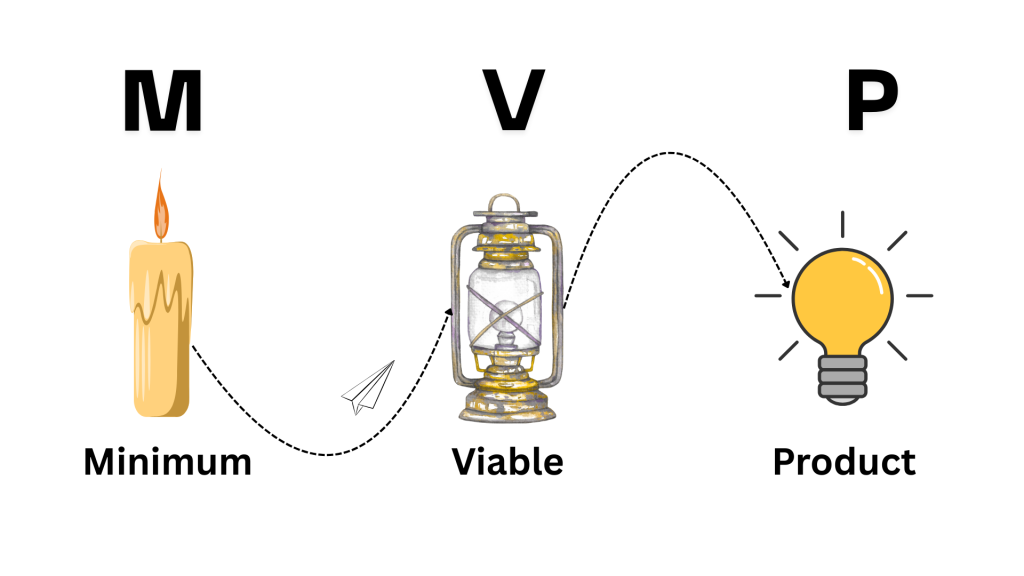
MVP
What Is a Minimum Viable Product (MVP)?
Minimum Viable Product, commonly known as MVP, is a concept introduced in 2009 as part of the Lean Startup methodology by Eric Ries.
An MVP is:
- The simplest version of a product
- Built with only the most important features
- Released to real users for feedback
The goal is not perfection. The goal is learning. An MVP helps you understand:
- Whether users like your idea
- Which features matter the most
- What needs improvement before full launch
In simple words, an MVP is a test version of your final product that helps you make better decisions.
Real-World Examples of MVP Success

Many well-known companies started with an MVP.
Airbnb
Airbnb did not start as a global platform. The founders placed a few air mattresses in their apartment and listed them online. That simple test proved people were willing to pay for short-term stays.
Dropbox
Before building the full product, Dropbox released a short video explaining how the product would work. The response was overwhelming. That feedback confirmed the demand even before development began.
These examples prove one thing: You do not need a perfect product to start. You need a validated idea.
Key Advantages of Using an MVP

Focus on Core Value
- MVP helps you test your main idea
- Only essential features are included
- You can check if the product solves a real problem
If users do not like a feature, you can change it early.
Reduced Cost and Less Rework
- You avoid building unwanted features
- Development time is shorter
- Bugs and errors are identified early
This saves both time and money.
Better Product Optimization
- User feedback guides improvements
- Performance issues are spotted early
- The final product becomes stronger
You build based on real data, not assumptions.
Early Customer Base and Trust
- Early users feel involved
- Feedback builds strong relationships
- Loyal users promote your product naturally
An MVP can also attract investors by showing market interest.
Faster Time to Market
- You launch sooner
- You start learning immediately
- You stay ahead of competitors
Speed matters in today’s digital market.
Important Things to Do Before Creating an MVP
Conduct Market Research
- Understand the problem you want to solve
- Study competitors
- Identify gaps in the market
Market research reduces risk.
Know Your Target Users
- Define who will use your product
- Understand their behavior and needs
- Track what they like and dislike
User insights shape better products.
Create a Clear Product Roadmap
- List current MVP features
- Plan future upgrades
- Define long-term goals
A roadmap keeps development focused.
Perform User Testing
- Test with real users or internal teams
- Observe first impressions
- Improve usability and design
Early testing avoids bigger problems later.
Build a Simple Landing Page
- Explain your product clearly
- Highlight key features
- Add images or videos
A landing page helps collect feedback and interest.
Why MVP Matters for Business Growth ?

An MVP is not just a development strategy. It is a business strategy.
-
You reduce financial risk
-
You validate demand early
-
You build products users actually want
Instead of guessing, you learn from real users.
Final Thoughts
Launching a new product is exciting, but risky. A Minimum Viable Product gives you a safe and smart way to begin. It allows you to test your idea, improve it step by step, and grow with confidence.
If you are planning to launch a new product, platform, or app, adding an MVP stage to your business plan can make all the difference. Start small, learn fast, and build smart.
