

You meet useful people at an industry event. You exchange LinkedIn connections. Then everyone returns to work, and the conversation stops.
A professional community can keep those relationships useful between events, projects, and career moves.
But another platform needs a purpose. Members need a reason to join, contribute, and return.
Professional networking software such as iScripts SocialWare Enterprise provides tools for profiles, connections, posts, and messaging. Building a community around those tools starts with understanding what your members need.
What makes a professional community worth joining?
A professional community brings people together around shared work, interests, or industry challenges. Its value comes from what members accomplish together: solving problems, exchanging experience, finding collaborators, or discovering opportunities.
An industry-specific social network makes that purpose more focused.
Independent architects might need project partners. Restaurant operators might want practical advice from peers. Manufacturing suppliers might need connections with relevant buyers.
“Meet other professionals” is a starting point. “Find experienced collaborators for your next project” gives people a clearer reason to participate.
1. Choose one audience and a recurring need
Before selecting features, speak with potential members.
Ask about the last time they needed advice, a referral, or a professional introduction. Where did they look? What was difficult? Did they find a useful answer?
Listen for recurring problems rather than collecting feature requests.
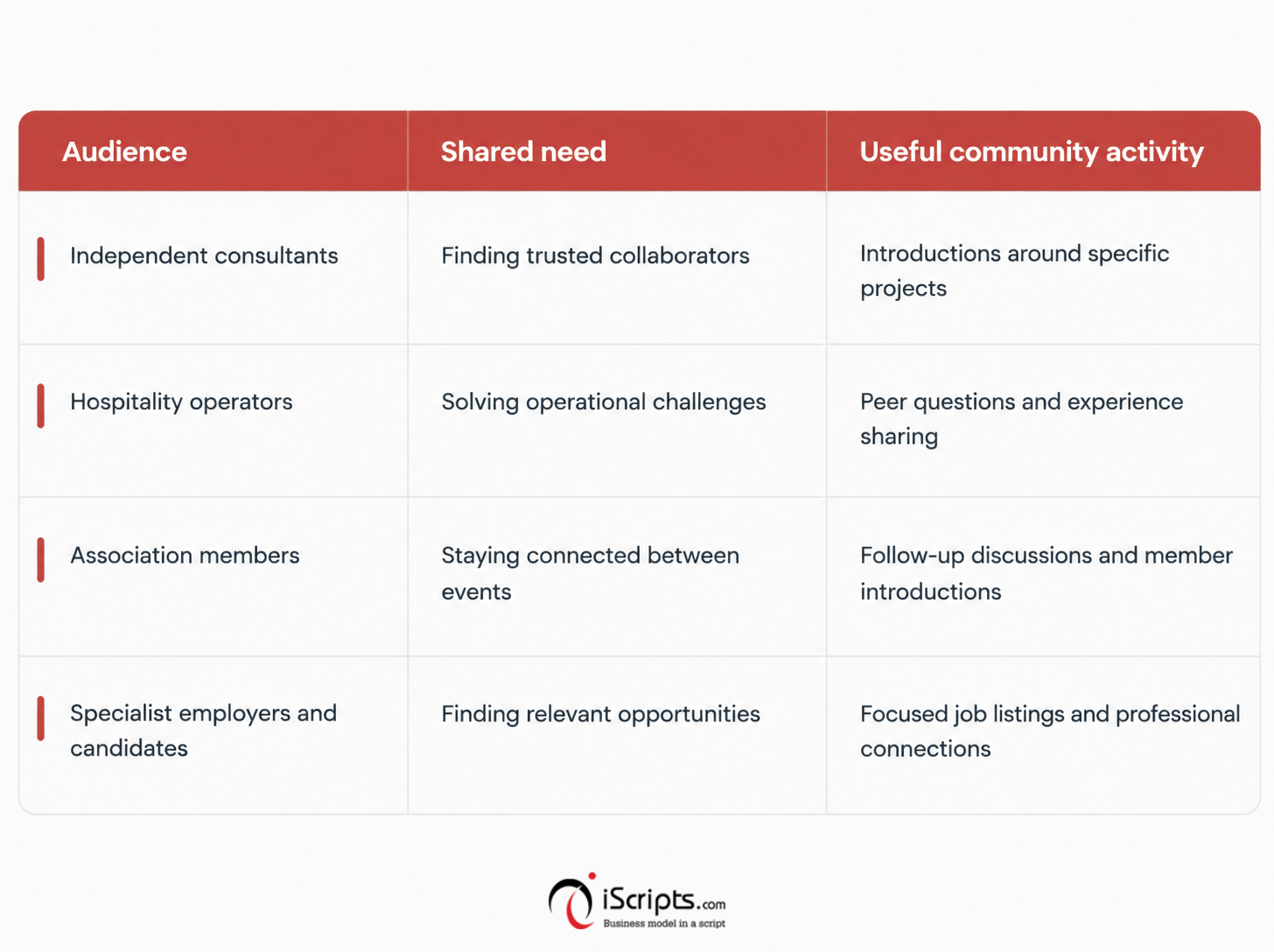
Effective community-building strategies begin with a clear niche and relationships people want to maintain.
Define your promise in one sentence: “This community helps [audience] achieve [specific outcome].”
2. Decide what should happen beyond LinkedIn
LinkedIn can remain part of your community strategy. Groups already support professional discussions and membership controls.
Your own website becomes worth considering when members need a more tailored experience: industry-specific profiles, connected business listings, membership plans, or workflows an existing group cannot adequately support.
For an association, LinkedIn might help people discover its work. A separately operated community could support focused member relationships and resources.
Ask: What would members gain that justifies using another platform?
If the answer remains unclear, test the concept with a small group before investing in a larger launch.
3. Recruit contributors before opening registration widely
A polished website with unanswered questions feels empty.
Invite a small founding group whose interests match the community’s purpose. Include people who can ask thoughtful questions, share practical experience, and welcome newcomers.
Speak with them individually. Find out what they would contribute and what they would like help with.
Prepare a few discussions based on their actual questions. When someone’s experience could help, invite them into that conversation personally.
Early participation takes effort. Assign someone to make introductions, follow up, and keep useful discussions moving.
4. Make the first visit lead somewhere useful
Registration starts the member experience.
Give newcomers one manageable next step: describe a current challenge, connect with a relevant person, or contribute to a discussion.
For example, welcome a hospitality operator by introducing someone who has handled a similar staffing problem. That gives them a practical reason to start talking.
Keep profile requirements proportionate. Collect the information members need to discover one another without turning onboarding into a lengthy form.
Profiles, connections, and messaging should support that first useful interaction—not become tasks members complete without a clear benefit.
5. Build recurring activities and clear expectations
Members need to know what happens here and how they can participate.
Choose a manageable rhythm:
- A weekly question about a shared work challenge.
- A member-led discussion of a completed project.
- Relevant job or collaboration opportunities.
- Follow-up conversations after industry events.
Respond to what members find useful. A quiet week may call for personal outreach rather than more broadcast content.
Set rules for promotion, recruitment, respectful disagreement, and confidential information. Explain how members report concerns and who responds.
Trust depends on consistent management as well as useful conversations.
6. Select software around the member journey
When considering how to build a professional networking website, map requirements to member actions.
Profiles and search support discovery. Connections and messaging support relationships. Company pages, articles, and job opportunities can serve business and career goals.
SocialWare Enterprise provides these professional networking building blocks. Its platform capabilities and membership options help you evaluate how those activities could work within your community.
For specialized directories, credential checks, or industry workflows, discuss software customization before committing to the scope.
Also decide who will manage hosting, updates, backups, permissions, and member support. Your operating plan should be as clear as your launch plan.
7. Measure value before expanding or monetizing
Registrations show interest. Returning participation shows whether members find ongoing value.
| Community goal | What to measure |
| Peer support | Questions receiving useful answers |
| Professional relationships | Relevant introductions and follow-up conversations |
| Career opportunities | Meaningful employer-candidate interactions |
| Paid membership | Renewals and reasons for cancellation |
Ask inactive members what they expected and what they could not find.
To monetize a professional networking community, connect paid benefits to demonstrated needs. Membership plans, business participation, or advertising may suit different audiences. Check the available subscription and advertising options before promising benefits.
Protect the experience members joined for. Excessive promotion can weaken the relevance of an otherwise useful network.
Build the community your industry would miss
Imagine a member returns after their first week. What brings them back?
An answer to their question? A promising introduction? A discussion they want to continue?
Make that experience repeatable before chasing a larger membership count.
Explore SocialWare Enterprise with one member journey in mind—from joining and finding a relevant professional to starting a useful conversation.
Then test that journey with real people. Their reasons for returning will tell you what to build next.

