
In recent years, there has been a significant shift in how consumers watch entertainment. Online streaming is becoming more and more popular among viewers compared to traditional television. OTT platforms have grown quickly because they offer customized content, flexible viewing, and access across multiple devices.
Launching an OTT platform now requires more than just producing top-notch content due to increased competition. For long-term success and revenue development, selecting the appropriate monetization approach is essential. Scalability, profitability, and audience retention are all directly impacted by how a platform charges its users.
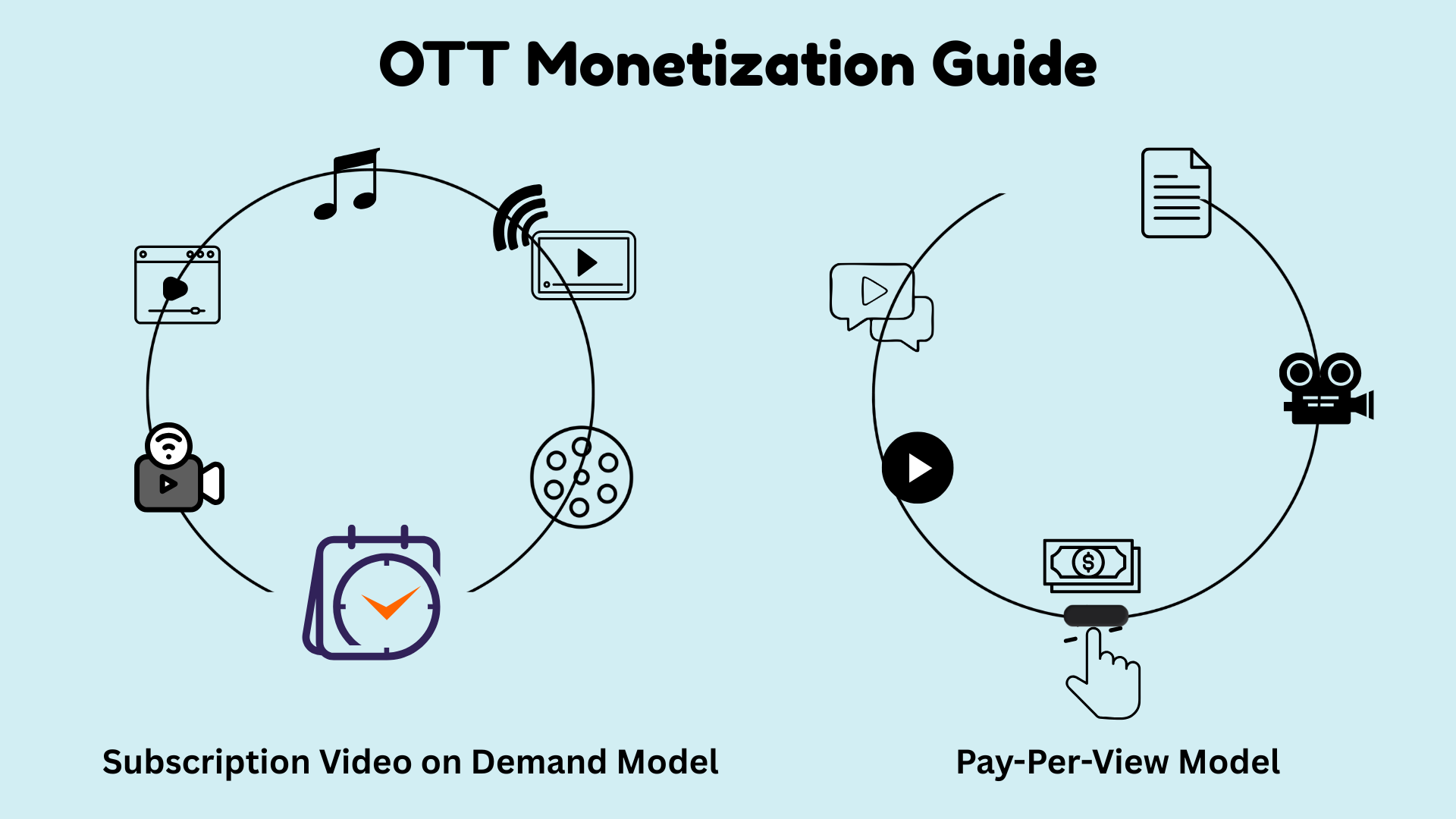
Two of the most popular OTT monetization models are:
- Subscription Video on Demand (SVOD)
- Pay-Per-View (TVOD)
The subscription model allows users to pay a recurring fee for unlimited access, while the pay-per-view model charges viewers for individual content or events. In this blog, we will compare both models, explore their advantages and challenges, and help you decide which OTT monetization strategy best fits your platform goals.
2.What Is OTT Monetization?
The term “OTT monetization” describes how streaming services and content generate revenue. OTT platforms use digital payment techniques to make money from viewers rather than depending on traditional broadcasting revenue. Because it directly impacts profitability, user experience, and long-term platform growth, selecting the appropriate revenue model is crucial.
Flexible viewing options are preferred by today’s audiences. They want to pay solely in ways that work for them and view content on any device at any time. The competition in digital entertainment has grown as streaming services continue to expand globally. In order to draw in and keep users, platforms now need to concentrate on both clever revenue techniques and high-quality content.
3.Subscription Video on Demand Model (SVOD)

Subscription Video on Demand Model (SVOD)
Subscription Video on Demand (SVOD) is a popular OTT monetization model where users pay a recurring fee to access content. Depending on the platform’s pricing plan, the payment may be made on a monthly or annual basis. Viewers can access the whole content catalog without having to pay for individual titles once they have subscribed.
With a variety of films, TV shows, documentaries, and exclusive content, this strategy focuses on giving subscribers ongoing value. Instead of encouraging one-time purchases, it promotes long-term participation.
3.2 How It Works
In the SVOD model, users first create an account and subscribe to a membership plan. After subscribing, they can stream content anytime during the subscription period.
Key elements include:
- Membership Access:
Users unlock full or partial access to the platform’s content after subscribing. - Tiered Pricing:
Many platforms offer multiple plans such as basic, standard, or premium. Higher tiers may include benefits like HD streaming, multiple screens, or ad-free viewing. - Content Catalog Strategy:
Success depends on maintaining a strong and diverse content library. Platforms regularly add new releases, original productions, and exclusive content to keep subscribers engaged.
3.3 Advantages of the Subscription Model
- Predictable Recurring Revenue
SVOD platforms generate steady monthly or yearly income. This helps businesses forecast revenue and plan future investments. - High User Retention
When users find consistent value in the content library, they are more likely to continue their subscriptions over time. - Better Customer Lifetime Value
Long-term subscribers contribute more revenue compared to one-time viewers. This makes customer relationships more valuable and sustainable.
3.4 Challenges of the Subscription Model
- High Content Acquisition Costs
Platforms must continuously invest in licensing or producing new content to remain competitive. - Subscriber Churn
Users may cancel subscriptions if content updates slow down or if competitors offer better options. - Continuous Content Requirement
Regular content updates are essential. Without fresh releases, user engagement and retention can decline quickly.
3.5 Examples of SVOD Platforms
Some of the most successful streaming services operate using the subscription model:
- Netflix — Known for original series, movies, and global content libraries.
- Disney+ — Offers popular franchises, family entertainment, and exclusive releases.
- Amazon Prime Video — Combines streaming content with additional membership benefits.
These platforms demonstrate how subscription-based monetization can build loyal audiences while creating sustainable long-term revenue.
4. Pay-Per-View Model (TVOD)

Pay-Per-View Model (TVOD)
It also known as Transactional Video on Demand (TVOD), is an OTT monetization model where users pay only for the content they want to watch. Viewers pay for particular films, TV series, or live events rather than subscribing to the entire collection. Content can be made available as a purchase that permits long-term watching or as a rental where access is restricted for a specific period of time.
4.2 How It Works
Users browse available titles under the Pay-Per-View model and pay a one-time price to access specific material. Premium film releases, special screenings, and live streaming events frequently employ this concept.
Viewers are charged per transaction, making it a flexible option for audiences who do not want recurring subscriptions. It works particularly well for event-based viewing such as concerts, sports matches, workshops, or early movie premieres where audiences are willing to pay for exclusive access.
4.3 Advantages of the Pay-Per-View Model
Instant revenue generating is one of Pay-Per-View’s key advantages. Without waiting for regular payments, every purchase immediately adds to platform earnings. There is no long-term commitment because consumers are not bound by subscriptions, which reduces barriers to access for new viewers.
This model is especially effective for exclusive or high-demand content. Platforms can charge premium pricing for new releases, limited events, or specialized content that attracts a targeted audience.
4.4 Challenges of the Pay-Per-View Model
Despite its flexibility, Pay-Per-View comes with certain challenges. Revenue can be inconsistent because earnings depend on how often users make purchases. Unlike subscription platforms, user loyalty tends to be lower since viewers may only return when specific content interests them.
The model also relies heavily on strong marketing efforts. Each release or event requires promotion to drive transactions and maintain steady engagement.
4.5 Examples of Pay-Per-View Platforms
Several popular streaming services successfully use the Pay-Per-View model:
- Apple TV — Offers movie rentals and purchases alongside premium releases.
- Google TV — Allows users to buy or rent movies and shows across devices.
- YouTube Movies — Provides transactional access to films without requiring a subscription.
These platforms demonstrate how Pay-Per-View works well for premium content distribution and event-driven monetization strategies.
5. Subscription vs Pay-Per-View: Key Differences
| Feature | Subscription (SVOD) | Pay-Per-View (TVOD) |
| Payment | Recurring | One-time |
| Revenue | Predictable | Variable |
| User Commitment | High | Low |
| Best For | Content libraries | Premium events |
| Retention | Strong | Limited |
6. When Should You Choose a Subscription Model?
Platforms with extensive content libraries and often updated series or movies are the ideal candidates for the subscription model. For series-based services, where consumers frequently return to watch fresh episodes or ongoing content, it is perfect. Because audiences with similar interests are more likely to pay for ongoing access, niche communities also profit from subscriptions. Another compelling use case for educational OTT platforms is that students would rather have continuous access to training materials, tutorials, and courses than pay for individual lessons.
From a business standpoint, the subscription model works best for organizations that can regularly create or purchase content. For instance, a fitness streaming service that offers daily workouts, an online learning platform that offers structured courses, or an entertainment platform with several shows can all make consistent revenue through recurring subscriptions. This strategy enables companies to maintain steady revenue growth while fostering long-term user relationships.
7. When Should You Choose a Pay-Per-View?
Content that consumers are prepared to pay for on an individual basis is best suited for the Pay-Per-View model. It is perfect for live sporting events if spectators wish to watch particular games or competitions. Another excellent example is concert streaming, where people frequently pay to see live performances online. Because viewers are drawn to early or exclusive releases, movie premieres also do well under this approach.
Pay-Per-View is also appropriate for special training events, webinars, and exclusive workshops where participants pay a one-time fee to participate or view premium content. Without requiring users to sign up for a long-term subscription, this approach enables businesses to profit from high-value events.
8. Hybrid Monetization: The Modern OTT Strategy
Nowadays, a lot of over-the-top (OTT) platforms use a variety of revenue strategies rather than just one. By using a hybrid strategy, platforms may maximize income while reaching a larger audience. For instance, some services provide a subscription plan that allows users to view normal content, while new releases or high-end films can be rented for a fee. This enables platforms to generate additional revenue from high-demand content in addition to maintaining consistent recurring revenues.
Offering free content to draw viewers while charging for special events or exclusive shows is another popular tactic. While paid events generate direct revenue from devoted consumers, free content helps pique audience interest. By mixing subscriptions, rentals, and premium releases, major streaming services like YouTube, Disney+, and Amazon Prime Video employ hybrid monetization techniques. Platforms may adjust to varying viewer tastes and maintain their competitiveness in the expanding digital entertainment market thanks to this adaptable strategy.
9. Key Factors to Consider Before Choosing
Selecting the right OTT monetization strategy requires careful planning. Businesses should evaluate several factors before deciding whether to use subscription, pay-per-view, or a hybrid model.
- Target Audience
Understanding your audience is the first step. While some viewers only want to pay for particular content, others demand full access through memberships. Selecting the appropriate model is aided by understanding user behavior, purchasing patterns, and viewing preferences.
- Content Type
The nature of your content plays a major role. Subscriptions are typically beneficial for platforms with extensive libraries or ongoing series. Pay-per-view pricing frequently works better for event-based material, such as live sporting events, concerts, or exclusive shows.
- Revenue Goals
Businesses must decide whether they want steady long-term income or quick returns from individual releases. Subscription models provide predictable recurring revenue, while transactional models generate income per event or purchase.
- Marketing Budget
Marketing needs differ between models. Subscription platforms focus on long-term brand building and user retention. Pay-per-view platforms require strong promotional campaigns for every release or event to drive sales.
- Platform Scalability
As the platform grows, the monetization model should support expansion. A scalable system allows businesses to add new content, pricing tiers, and features without affecting user experience.
- Regional Pricing Strategy
Audience purchasing power varies across regions. Flexible pricing, localized plans, and regional offers help attract users from different markets and improve global reach.
By evaluating these factors, OTT businesses can choose a monetization strategy that aligns with their audience needs, content strengths, and long-term business objectives.
10. Future Trends in OTT Monetization
As audience expectations and technological advancements vary, OTT monetization is constantly changing. In order to increase revenue and give users more flexibility, platforms are currently implementing new techniques.
Microtransactions, which enable viewers to pay little sums for particular perks like early access, supplementary content, or exclusive episodes, are growing in popularity. This strategy increases platform revenue sources while giving users greater choice over their spending.
Ad-supported levels are also being introduced by many services. In return for watching ads, these plans provide free access or reduced subscription costs. This enables platforms to draw in price-conscious users while still making money from advertising.
AI personalization is another significant trend. Artificial intelligence is used by streaming services to evaluate viewing habits and make content recommendations based on user preferences. Customized suggestions boost viewing duration, lower subscription attrition, and enhance engagement.
Regional subscription bundles are another way that platforms are growing. Companies offer personalized plans based on regional markets, linguistic preferences, and purchasing power rather than a single global price. This tactic aids OTT platforms in expanding into emerging areas and reaching new audiences.
Together, these trends show that the future of OTT monetization will focus on flexibility, personalization, and diversified revenue models.
11. Conclusion
Although they meet different business goals, both the Pay-Per-View and Subscription Video on Demand models present significant prospects for OTT platforms. The subscription model is perfect for platforms with substantial and frequently updated content libraries since it emphasizes long-term relationships and steady recurring revenue. However, for premium releases, live events, and unique content that viewers are prepared to buy separately, the pay-per-view model works effectively.
For any OTT platform, there isn’t a single ideal revenue model. Target audience, content kind, growth strategies, and revenue projections are some of the variables that determine the best option. In order to strike a balance between consistent revenue and variable earning options, many prosperous platforms integrate several methods.
In the end, companies should select a monetization strategy that complements their entire objectives and user experience plan. OTT platforms may create long-term revenue streams and succeed in the cutthroat streaming market by comprehending audience behavior and responding to market trends.
Ready to Launch Your Own Streaming Platform?
Turn your OTT idea into a powerful streaming business. Whether you want to build a platform like Netflix or create a niche video service, the right technology and monetization strategy make all the difference.
Launch a fully scalable OTT platform with subscription, pay-per-view, and hybrid monetization options built in. Manage content easily, grow your audience faster, and start generating revenue from day one.
 Start building your Netflix-style platform today and bring your streaming vision to life.

