

A great business idea means nothing if people never hear about it. Many startups fail not because the idea is bad, but because they do not know how to promote it. If you want your idea to turn into a real business, you must learn how to get attention, build interest, and reach the right people at the right time.
Some ideas may feel strong enough to sell themselves, but even the best ideas need a push in the beginning. That first bit of traction helps everything else fall into place. To reach your audience, you need smart and affordable ways to grow. This is where growth hacking comes in.
The good news is that building and promoting your brand does not have to be expensive. Most growth hacking strategies cost very little or nothing at all. They rely more on creativity, testing, and timing than on big budgets.
Every business is different. Not every strategy will work for everyone. Still, these ideas can spark creativity and help you find what works best for your startup. Below is a list of proven growth hacking strategies, but first, let’s understand what growth hacking really means.
What Is Growth Hacking?
Growth hacking is a term that first appeared in 2010. It was introduced by Sean Ellis, the CEO of GrowthHackers. Since then, startups and entrepreneurs around the world have adopted it.
Growth hacking focuses on fast growth using low-cost methods. These strategies are often experimental. They rely on testing, learning, and improving quickly. Growth hacking combines creative marketing, automation, and data analysis to find the fastest path to growth.
In simple terms, growth hacking is about growing a startup quickly without spending much money.
What Skills Does a Growth Hacker Need?
Growth hacking covers many skills. Some are technical, while others are creative. Below are some of the most important skills every growth hacker should understand:
-
SEO
-
Copywriting
-
A/B testing
-
Marketing automation
-
Customer retention
-
Conversion rate optimization
-
Data analysis
-
Social media marketing
A good growth hacker also needs strong digital thinking, a data-driven mindset, and the ability to test new ideas without fear of failure.
Growth hacking may sound complex, but at its core, it is about using smart and simple strategies to grow faster on a budget.
Common Tools Used by Growth Hackers
Tools play a big role in growth hacking. They help save time, automate tasks, and track results. Some commonly used tools include:
-
Zapier
-
Canva
-
Airtable
-
HubSpot
-
Google Analytics
-
Buffer
-
Ahrefs
There are many other tools available, and the right set depends on your goals and strategy.
Launch on Product Hunt
Pitching a product is one of the hardest parts of building a startup. Many founders spend weeks preparing, only to see very little response.
Product Hunt helps solve this problem. It is a platform where startups can launch products and gain visibility early. It allows founders to reach users, media, and potential buyers even before raising funding.
Product Hunt is a strong community for discovering new products. A successful launch can bring attention from top blogs and online platforms within days.
To increase your chances of success, follow these tips:
-
Respond to every question
-
Use a simple and clear logo GIF
-
Add screenshots, videos, and product demos
-
Write a strong and clear tagline
-
Explain the problem you are solving
-
Offer a special deal for Product Hunt users
Take time to prepare your launch. A well-optimized listing can make a big difference.
Referral Marketing
Referral marketing uses your existing customers to grow your business. It turns happy users into promoters.
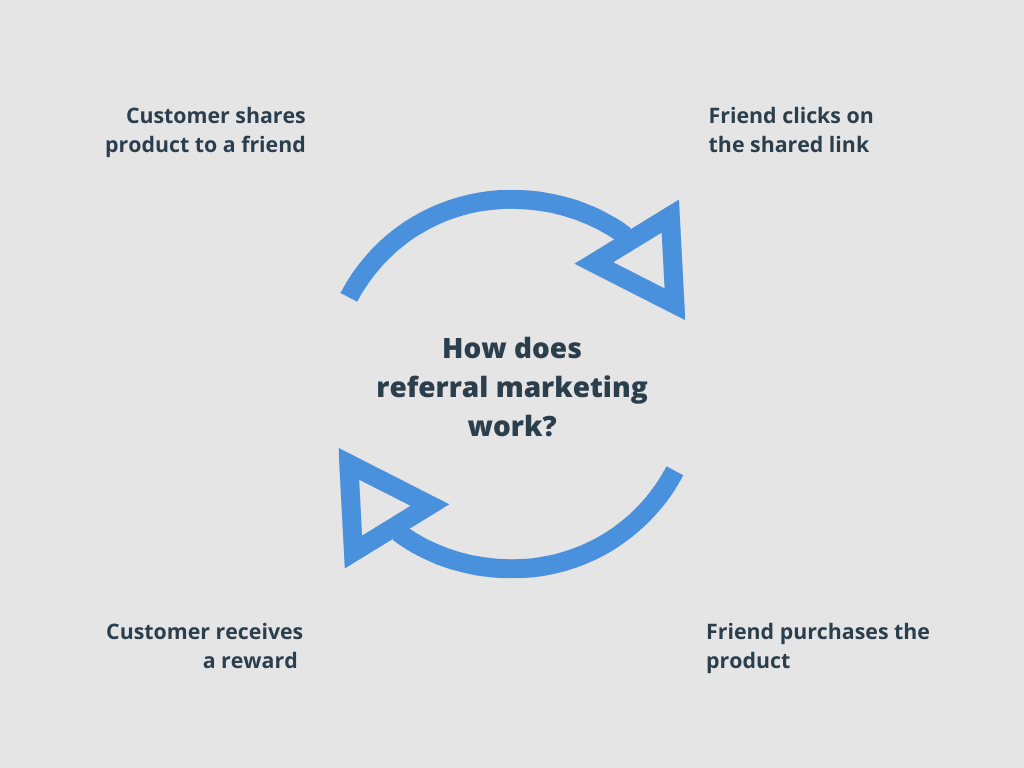
The process is simple. Customers share your product using a referral link. When someone signs up or makes a purchase through that link, the referrer earns a reward.
You only pay when results are delivered. This makes referral marketing cost-effective and low risk.
Here is visual representation of the referral marketing process:
To get started, you need an affiliate or referral program. This gives users a unique link to share.
Helpful tips for referral marketing:
-
Make sharing easy
-
Offer clear rewards
-
Encourage loyal users to refer others
Building a referral network takes time, but the results can be long-lasting.
Build a Pre-Launch Email List
A pre-launch email list helps you reach users before your product goes live. It allows you to test ideas, collect feedback, and build interest early.
Create a signup page for people who want updates. Let them know when the product is launching. When launch day arrives, you already have an audience ready to visit your site.
This can drive strong traffic and early signups from day one.
Reward Social Sharing
Social sharing increases reach and visibility. When users share your content, more people discover your brand.
Reward users for sharing your product, content, or offers. This could be early access, discounts, or bonus features.
Set up a simple social reward program from the start. Early rewards help build momentum.
Create Urgency
Urgency pushes users to act faster. Startups grow by encouraging action at the right time.
You can create urgency in a few simple ways:
-
Set deadlines for offers
-
Show limited availability
-
Offer a bonus for immediate action
Urgency works best when it feels real and honest.
Get Reviews From Bloggers
Bloggers are trusted voices in many industries. A positive review from the right blogger can bring strong traffic and credibility.
Reach out to bloggers in your niche. Offer them access to your product or service. Ask them to share their honest thoughts.
This benefits both sides. They get content. You get exposure.
Use Your Email Signature
Your email signature is often overlooked. Yet, it appears in every email you send.
A strong email signature can promote blog posts, product demos, social profiles, and special offers. Many successful brands use email signatures to start conversations and generate leads.
Tools like HubSpot’s Email Signature Generator make this easy to set up.

Give Your Product to Influencers
Influencers help spread your message faster. They already have the trust of their audience.
There are two main types of influencers:
Friends and family can help spread the word early. Personal recommendations often lead to faster trust.
Social media influencers have larger audiences. Choose those whose followers match your niche. Give them free access to your product and let them share their experience.
This puts your brand in front of people who are already interested.
Bonus Growth Hacking Ideas
If the strategies above do not fit your business, try these:
-
Partner with another brand
-
Create an invite-only product
-
Start a blog or YouTube channel and post regularly
Growth hacking is about testing and learning. Try different ideas and track what works best for you.
If you want to go deeper, explore 13 Sure-Fire Twitter Growth Hacking Strategies for Startups to discover practical ways to grow your audience and increase engagement on social media.
Growth hacking works best when it is tested and adapted. Try one or two strategies from this list and see how they fit into your marketing plan. Small changes can lead to meaningful results over time.
Growth is not about copying others. It is about experimenting, learning, and improving. Which growth hacking strategies have worked for you so far, and which ones are you planning to try next?

We help you build your dream project!


