
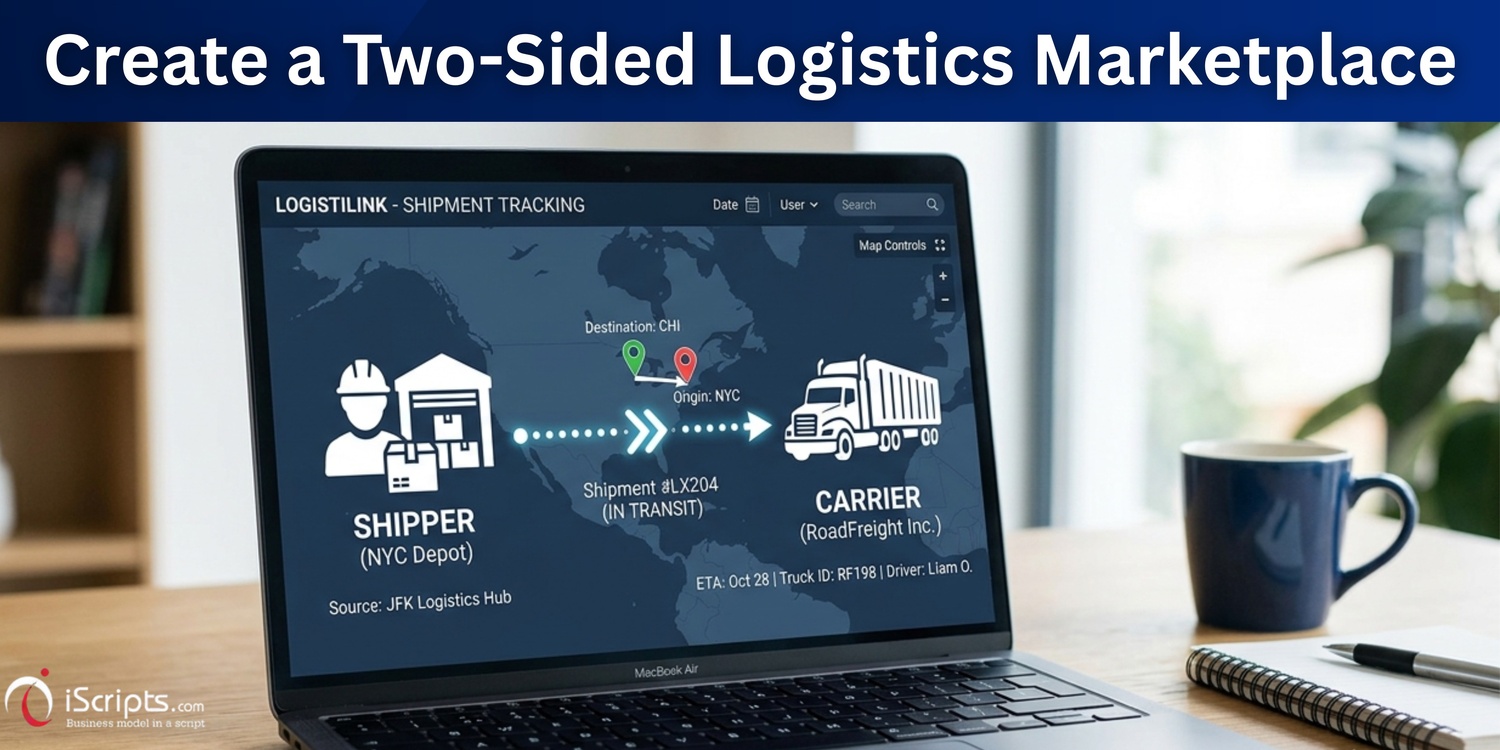
The logistics industry is quickly adopting digital transformation. Businesses no longer depend only on phone calls, spreadsheets, or manual coordination to connect shippers with carriers. Instead, two-sided logistics marketplaces are becoming the favoured option for improving freight operations, increasing shipment visibility, and linking businesses with transportation providers in real time.
The success of companies like Uber Freight demonstrates that digital marketplaces can change the logistics industry. As a result, many logistics startups, trucking companies, freight brokers, third-party logistics (3PL) providers, and entrepreneurs are eager to create their own logistics marketplace targeting a specific city, country, or niche industry.
However, building a successful marketplace involves more than just creating a website or mobile app. It takes a deep understanding of your market, attracting both shippers and carriers, selecting the right technology, and fostering trust between users.
In this blog, you will learn how to create a two-sided logistics marketplace in any region. You’ll discover the essential features your platform needs and the steps to build a scalable digital freight platform.
What Is a Two-Sided Logistics Marketplace?
A two-sided logistics marketplace is an online platform that connects two groups of users:
- Shippers – These are individuals or businesses needing goods transported.
- Carriers – This group includes trucking companies, fleet owners, owner-operators, or logistics providers that deliver shipments.
Rather than searching manually for transportation, shippers can post shipment requests, compare available carriers, get quotes, and book deliveries. At the same time, carriers can access new business opportunities, manage loads more effectively, and use their vehicles more efficiently. This digital model streamlines communication, enhances transparency, and helps both sides complete transactions through a single platform.
Why Are Two-Sided Logistics Marketplaces Growing So Quickly?
The demand for digital freight platforms is rising because traditional logistics processes often involve delays, paperwork, and limited visibility. As eCommerce, regional trade, and last-mile delivery continue to grow, businesses increasingly seek technology that makes freight management quicker and more efficient. A modern logistics marketplace tackles these issues by:
- Connecting shippers and carriers instantly.
- Reducing manual coordination.
- Improving shipment tracking.
- Increasing fleet utilization.
- Simplifying payment processing.
- Automating booking and dispatch operations.
Why Build a Two-Sided Logistics Marketplace in Your Region?
Many businesses think they must compete on a national or global scale from the start. In reality, beginning with a specific region often leads to quicker adoption and sustainable growth.
- Solve Local Logistics Challenges
Every region has distinct transportation needs. Some areas struggle with a lack of available carriers, while others deal with ineffective load matching or poor communication between shippers and transport providers. A regional marketplace lets you tackle these local challenges with solutions tailored to your market.
- Build Stronger Relationships
Working within a specific region simplifies building trust with local carriers and businesses. Strong relationships foster repeat business and help establish your platform as a reliable logistics partner.
- Expand Gradually
After your marketplace gains traction in one city or region, you can gradually move into neighbouring markets, adding new carriers, routes, and services without overwhelming your operations.
Who Can Benefit from a Two-Sided Logistics Marketplace?
A two-sided logistics marketplace can support a wide array of businesses that rely on efficient transportation and freight management.
Logistics startups can use it as a faster entry point with a scalable digital business model. Trucking companies can connect with more shippers, reduce empty miles, and improve fleet utilization. Freight brokers can streamline load matching and communication. Third-party logistics (3PL) providers can centralize shipment management and carrier coordination.
Entrepreneurs interested in building an Uber for Trucks platform can also use this marketplace model to create a regional network where shippers and carriers connect seamlessly through one digital platform.
Key Features Every Logistics Marketplace Should Include
Choosing the right logistics marketplace software is one of the most crucial decisions you’ll make. Your platform should offer value to both shippers and carriers while simplifying administration.
- Easy Registration and User Management: The platform should provide simple onboarding for shippers, carriers, fleet owners, and administrators, making it easy for users to create accounts and begin using the system.
- Shipment Posting and Booking: Shippers should be able to create shipment requests with details such as the pickup location, destination, cargo type, delivery timeline, and pricing preferences.
- Carrier Matching: The platform should intelligently connect shipment requests with suitable carriers based on location, vehicle type, availability, and service capabilities.
- Real-Time Shipment Tracking: Live shipment tracking enhances transparency and allows customers to monitor deliveries from pickup to final destination.
- Secure Payment Processing: Integrated payment gateways simplify transactions while ensuring secure payments between shippers and carriers.
- Ratings and Reviews: A transparent review system builds trust, encourages quality service, and helps users select reliable logistics partners.
- Admin Dashboard: The administrator should manage users, shipments, payments, commissions, disputes, reports, and platform performance from a unified dashboard.
Step-by-Step Guide to Building a Two-Sided Logistics Marketplace
Step 1: Identify Your Target Market
Before building your platform, figure out exactly who you want to serve.
Ask questions like:
- Will you focus on local deliveries or long-distance freight?
- Which industries create the highest transportation demand?
- Who are your primary customers- small businesses, manufacturers, wholesalers, or retailers?
A clearly defined niche helps you develop a stronger marketplace strategy.
Step 2: Build Both Sides of the Marketplace
The success of a two-sided logistics marketplace relies on balancing supply and demand.
Without enough carriers, shippers will struggle to find transportation quickly. Without enough shipment requests, carriers won’t remain active. Develop a strategy to attract both groups using incentives, partnerships, referral programs, and targeted marketing campaigns.
Step 3: Choose the Right Logistics Marketplace Software
Building a logistics platform from scratch requires considerable time and investment.
Using white-label logistics marketplace software lets startups launch faster while benefiting from features that have already been created, tested, and optimized. This approach lowers development costs and speeds up time to market.
Step 4: Simplify the User Experience
Both shippers and carriers should complete their tasks with minimal effort. A smooth user experience encourages repeat usage and customer loyalty.
Focus on:
- Simple navigation
- Fast booking process
- Mobile-friendly design
- Clear shipment updates
- Easy communication
Step 5: Build Trust and Transparency
Trust is essential in logistics.
Verify carriers, maintain clear pricing, provide shipment tracking, encourage reviews, and offer quick customer support to instil confidence among users.
Step 6: Launch and Scale Your Marketplace
Once your marketplace is live, focus on sustainable growth.
Expand your carrier network, enhance customer support, introduce new service categories, optimize your platform using user feedback, and gradually enter additional cities or regions. Growing strategically helps maintain service quality while increasing market reach.
Common Challenges When Launching a Logistics Marketplace
Launching a digital freight platform presents challenges that every entrepreneur should be prepared for. One of the biggest hurdles is attracting both shippers and carriers simultaneously. Keeping marketplace activity balanced requires ongoing onboarding and marketing efforts.
Other common challenges include building trust between users, ensuring accurate shipment tracking, managing disputes, handling secure payments, and maintaining platform scalability as demand grows.
Choosing reliable technology and focusing on user experience can help tackle these challenges effectively.
Why White-Label Logistics Marketplace Software Is the Smart Choice
Creating a custom logistics platform from scratch can take months or even years. For startups and growing businesses, speed can be a competitive advantage. A white-label logistics marketplace solution provides pre-built functions, enabling businesses to launch quickly while cutting development costs and technical complexity.
Instead of spending valuable time building core features, entrepreneurs can focus on expanding their carrier network, gaining customers, and growing their marketplace.
Conclusion
The demand for digital logistics solutions continues to grow as businesses look for faster, smarter, and more transparent ways to connect shippers with carriers. Building a two-sided logistics marketplace allows entrepreneurs to create value for both sides of the transportation ecosystem while establishing a scalable and profitable business.
Whether you’re a logistics startup, trucking company, freight broker, 3PL provider, or entrepreneur building an Uber for Trucks platform, success hinges on choosing the right market, understanding your users, and investing in technology that can scale with your business.
With a reliable white-label logistics marketplace software solution like iScripts Logistic Partners, you can launch your platform faster, lower development costs, and concentrate on building a trusted logistics network in your region.
