
People enjoy buying products they can customize. Instead of choosing a conventional item, they can add their names, messages, or designs. This enables them to produce something that expresses their unique style or idea. Customized goods are not just for individual usage. They are also great gift options and can be used for company branding.
Over the years, customer preferences have changed. In the past, businesses produced many identical goods. Nowadays, many companies let buyers personalize products before purchase. This process is made simple by online resources like Teespring and CustomInk. Online, customers can create and purchase unique things. This trend is growing as people are drawn to personalized, meaningful products.
2. The Growth of Personalized Products in Online Shopping
Customized and unique products are growing in popularity. Many buyers select products that showcase their uniqueness and style. This tendency has also been influenced by creative culture and social media. Because of this, when people discover personalized products online, they often feel inspired to create their own items as well.
Nowadays, many people prefer personalized goods to generic ones. These goods seem more meaningful and unique. For example, a mug with someone’s name or a t-shirt with a personalized design feels more personal than a basic item. Personalized products are frequently popular gifts for birthdays, anniversaries, and other important occasions.
3. Popular Types of Personalized Merchandise
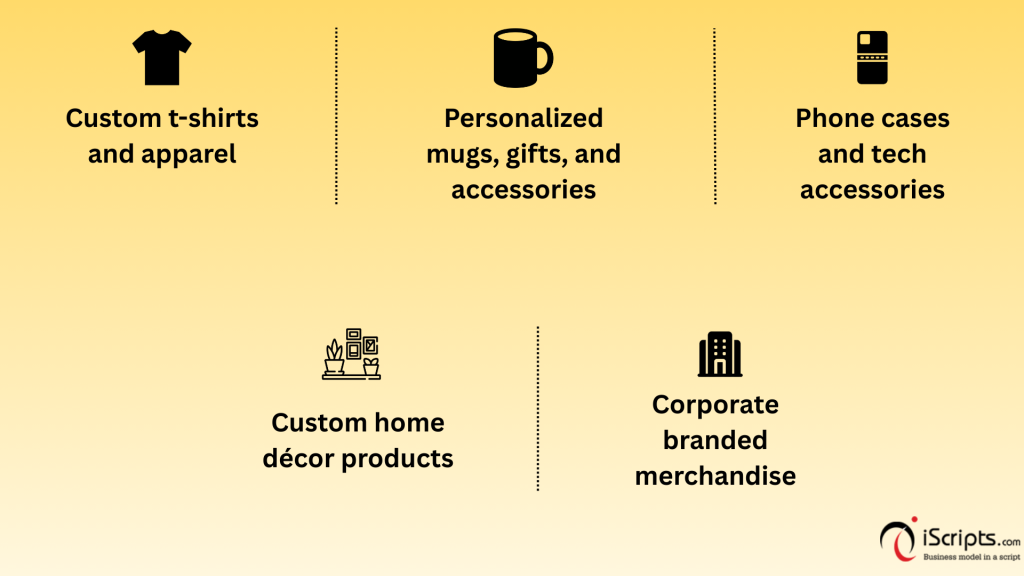
Personalized merchandise comes in many forms. Today, customers can customize a wide range of everyday products by adding their own names, designs, messages, or logos. This makes the product more personal and meaningful.
Examples of commonly used customized products:
3. How E-commerce Platforms Enable Personalization
E-commerce platforms have made it easy for customers to create personalized products online. Customers may design, evaluate, and order personalized things in a few simple clicks with modern technology. These platforms use various technologies and tools to streamline the process for businesses and customers alike. Let’s look into how these technologies help transform the industry.
- Online design tools: Customers can add text, images, colors, or logos to a product using these options. For instance, a person can create a t-shirt by selecting a template, uploading a photo, or inputting their name. The design process is easy to use and straightforward.
- Real-time product previews: The platform displays the final product’s appearance as users upload their designs. This enables them to make adjustments before placing the order. Additionally, it reassures customers that the product will live up to their expectations.
- Automated order processing and printing: Once a customer places an order, the system automatically sends the design to the production team or printing machine. This reduces manual work and speeds up the process.
- Inventory and shipping systems: Businesses can manage delivery and keep track of available products thanks to this connectivity. When the item is prepared, it can be promptly packed and sent to the consumer.
Because of these technologies, e-commerce platforms make personalized shopping simple, fast, and convenient for customers around the world.
5. Benefits of Personalized Merchandise for Businesses
Businesses can benefit greatly from personalized merchandise. Customers feel that a product is more distinctive when they are able to add their own element to the design. This strengthens the bond between the brand and the consumer. Let’s explore a few advantages for companies who offer personalization.
Higher customer engagement: People get more involved in the purchasing process when they design their own goods. They spend more time experimenting with various design alternatives and browsing the website. The purchasing experience is enhanced and made more memorable by this engagement.
Increases a product’s value: Customized goods are frequently perceived by customers as having greater significance than standard products. Consequently, companies are able to set slightly higher pricing for these goods. For something created specifically for them, many consumers are willing to spend extra.
Brand loyalty and repeat purchases: Customers are more likely to come back and make additional purchases when they receive a personalized product they appreciate. They might also tell their friends and relatives about the brand.
Opportunities for niche markets: Businesses might produce products for particular demographics, occasions, or hobbies. Products can be created, for example, for sports teams, small towns, or special occasions. This aids companies in expanding their customer base and market share.
6. Benefits for Customers
Customers enjoy many benefits when they choose customized products instead of regular ones.
-
Personal and reflects personal style
Customized products feel more special because customers can add their own designs, names, or messages. They can also choose colors and styles they like. This enables them to produce a product that genuinely reflects their preferences and feels custom-made.
-
Better gift option
Gifts that are personalized are considerate. A personalized t-shirt or mug has greater significance than a generic one.
-
Strong emotional value
Customized products often evoke special moments. This makes them more valuable than generic items.
-
Unique and different
Generic products are the same for everyone. Customized items are different and stand out from others.
7. The Role of Print-on-Demand and Custom Printing
Print-on-demand has made it easier to sell personalized products online. In this, a product is printed only after a customer places an order. Companies are not required to manufacture goods beforehand.
How print-on-demand works ?
Customers choose a product and add their design online. This can include text, images, or logos. Once the order is placed, the design is sent to the printing system. After printing, the product is transported to the client.
Reduced inventory risks for businesses
Businesses do not need to keep large amounts of stock. Products are created only when someone buys them. This reduces storage costs and the risk of unsold items.
Faster production for customized orders
Modern printing technology allows quick production. Designs can be printed directly onto products quickly. This helps businesses deliver customized orders to customers faster.
8. Challenges in Selling Personalized Merchandise
Selling personalized products can also create some challenges for businesses.
- Managing many product variations
Customers can choose different colors, sizes, and designs. Numerous product combinations result from this. Businesses may find it challenging to manage all these possibilities.
- Production and delivery delays
Making personalized goods takes time. After the order is placed, each item must be created or printed. Production and shipment may occasionally be delayed as a result.
- Maintaining product quality
Each personalized order is unique. Companies need to make sure that every product has attractive printing and design. Maintaining the same standard of quality for each order can be challenging.
- Handling returns and customer expectations
Customers might not always be pleased with the finished product. Personalized goods are more difficult to resell because they are created for a particular individual. Companies must handle refunds and maintain client satisfaction.
9. Future Trends in Personalized E-commerce
Personalized online shopping will continue to grow in the coming years. New technology is making it easier for businesses to offer customized products to their customers.
- AI-driven product recommendations
Artificial intelligence can learn what customers like by looking at their shopping activity. Using this information, online stores can suggest products that match their interests. This helps customers quickly find products they may like.
- 3D product customization tools
New tools allow customers to see products in 3D while designing them. They can rotate the product and view it from different angles. This helps them understand how the final product will look before buying.
- On-demand manufacturing technologies
In this method, products are made only after a customer places an order. Modern machines and printing technology make production faster. This reduces waste and helps businesses complete customized orders more efficiently.
- Growth of personalized branding for businesses
Customized products are a common technique for companies to promote their brands. Businesses can create customized products using their logos or messaging. As a result, they can interact with customers more effectively and raise brand awareness.
Case Study: How Teespring Uses Personalization to Grow
A good example of successful personalized merchandise is Teespring (now known as Spring). The platform allows people to create and sell customized products such as t-shirts, hoodies, mugs, and phone cases. Users can easily add their own designs, text, or artwork using simple online design tools.
Teespring became popular because it made customization very easy for both creators and customers. Anyone can upload a design, choose a product, and start selling it without managing inventory. The platform only prints the product after a customer places an order. This print-on-demand model reduces risk because creators do not need to produce products in advance.
Social media also played a big role in Teespring’s growth. Many influencers and online creators use the platform to sell merchandise to their followers. Fans enjoy buying products that represent their favorite creators, which makes the items feel more personal and meaningful.
This model shows how personalization can help businesses grow. By combining simple design tools, on-demand printing, and social media promotion, Teespring created a successful system for selling customized products online. Platforms like PrintLogic follow a similar idea by helping businesses offer personalized merchandise easily while managing orders, production, and delivery efficiently.
10. Conclusion
Personalized merchandise is becoming increasingly popular as customers want products that feel unique and meaningful. Instead of buying generic items, many people now prefer products that reflect their personal style. Social media, creator culture, and easy-to-use online design tools have also helped this trend grow in online shopping.
The future of e-commerce will likely include even more customization. As a result, new technologies such as AI recommendations, advanced design tools, and faster production methods will make personalized shopping easier for both businesses and customers. As demand continues to rise, personalization will play an important role in the growth of online retail.
For businesses, offering personalized products can be a powerful way to stay competitive. It helps attract customers, increase engagement, and build stronger brand loyalty. By giving customers the option to customize products, businesses can create a more interactive and memorable shopping experience.
Platforms like PrintLogic help make this possible. With tools that support product customization, automated order processing, and smooth production workflows, PrintLogic allows businesses to offer personalized merchandise without complex operations. By using solutions like PrintLogic, businesses can easily enter the growing personalized product market and meet the changing expectations of modern customers.
Build Your Own Personalized Merchandise Today !

