
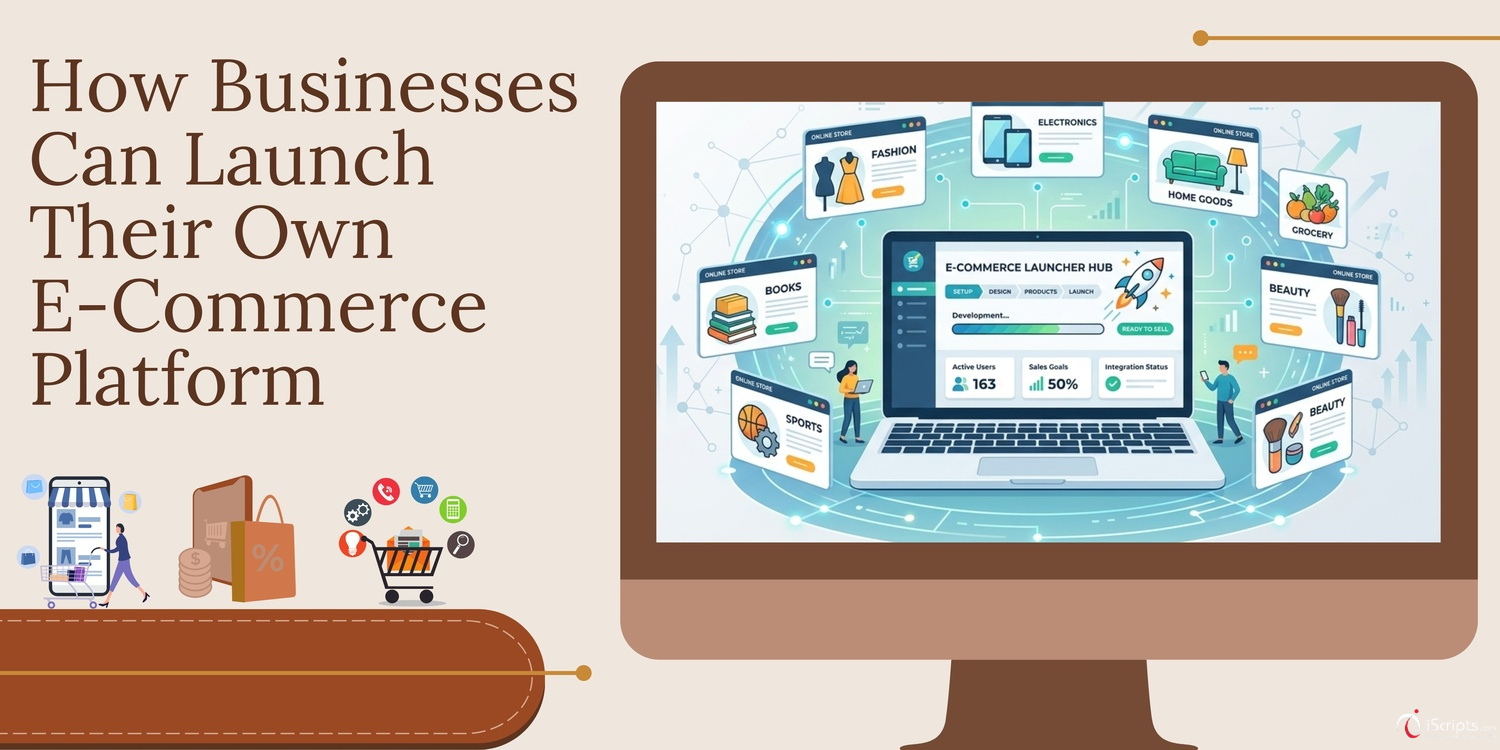
The first thing every business in this economy should know is that you need to embrace e-commerce. It doesn’t matter the size of the business; establishing an online presence will guarantee you reach new potential customers, no matter where they are in the world. Online sales are usually the primary focus, but many businesses don’t recognize the potential in creating an e-commerce platform of their own.
Many people know of the online store builders available, such as Shopify and BigCommerce, but what if you could do the same and build a viable business that enables countless others to create their own online stores?
GoStores is the perfect solution for an exploding new market. It enables anyone the opportunity to build and maintain their own store-building site, allowing them to sell online store-building services to their customers. You can create e-commerce services for your clients, all while keeping your own business safe from a lengthy and costly process of creating a business ecosystem. Next, we will review the many opportunities available to business owners that are waiting to use GoStores to enter the e-commerce platform market.
Why Launch Your Own E-Commerce Platform?
Every year, millions of businesses go online, causing the e-commerce industry to grow at an astounding rate. While you can sell goods online to make a profit, providing a service for other businesses to create stores gives you the opportunity to make an even larger profit. Establishing your own hosted e-commerce platform allows you to:
- Earn income through monthly or yearly subscriptions
- Support multiple businesses at the same time
- Form long-term contracts with customers
- Offer additional services like marketing, SEO, website design
- Grow a scalable and predictable business
You are no longer a single business owner in an expansive market. You are now the owner of the market, selling services to others. You are in a position of power.
Understanding the SaaS E-Commerce Model
An incredibly lucrative business model currently employed within the technology space is Software as a Service (SaaS). Consider Shopify. They provide a coding and hosting solution so that businesses can easily set up their stores without the backend technical worries. You can implement this model in your own business.
GoStores is a solution to this challenge. It permits you to develop a white-label resource where your clientele can do the following:
- Create store accounts
- Choose planned subscriptions
- Create and manage store inventory
- Modify the store as they choose, including a payment interface
- Begin selling online
You create a steady subscription revenue stream with every new customer, a steady stream you can increase with additional add-ons and payment integrations, a business that builds your business.
A Simple Way to Enter the E-Commerce Industry
Constructing an e-commerce site from the ground up costs a lot of money. It requires hiring developers, UI/UX designers, payment integrators, hosting professionals, security teams, and maintenance teams. This could cost hundreds of thousands of dollars.
GoStores eliminates this concern. With GoStores, businesses save years of development by using our prebuilt platform and can direct their focus on scaling, improving their branding, and attracting customers rather than developing their website. These costs are reduced significantly:
- development time
- operational difficulty
- technical costs
- costs of reliability
Key Features That Help Businesses Launch Faster
A successful e-commerce platform needs more than just store creation tools. It needs automation, flexibility, and scalability. Here are some of the most valuable features businesses should look for:
1. Automated Subscription Management
Manual billing creates unnecessary work. With automated billing systems, businesses can:
- Offer monthly or annual plans
- Automatically renew subscriptions
- Handle customer upgrades and downgrades
- Manage invoices efficiently
This improves the customer experience while reducing administrative tasks.
2. Easy Store Creation for Users
Customers expect an easy way to start selling their products online without any technical expertise. Drag and drop website builders enable them to create customizable layouts, add their products, and create a storefront without any hassle. The simpler the process of creating an online store, the quicker it will get started, and the higher the chances of keeping the customer onboard for a long time.
3. Multi-Store Management from a Single Dashboard
An effective e-commerce solution will enable you to run several stores independently on one unified platform. This simplifies the management of customers’ account details, subscription information, and performance through a single control panel. This capability is especially important as your clientele expands since it enables scalability with less operational hassle.
4. Flexible Payment Gateway Integration
Not all businesses have the same clientele, nor do all consumers like using the same payment systems. Using a website that supports various payment gateways will provide store owners with more options for receiving payments from credit cards and digital wallets. It allows businesses to target a larger number of consumers.
5. Mobile-Responsive and SEO-Friendly Design
The present-day customers who shop online prefer using their mobile devices more often than ever before. For this reason, each web store should be fully optimised to work well not only on computers but also on smartphones and tablets. On top of that, the built-in SEO functionality provides web stores with additional opportunities to increase their online presence and gain higher positions in search engine results pages.
Who Can Benefit from Launching Their Own E-commerce Platform?
- Web Designers: Provide hosted shops as an added service and gain continuous revenue.
- Internet Marketing Agencies: Provide online shops alongside SEO and internet marketing packages.
- Web Hosting Providers: Go beyond hosting by providing ecommerce services.
- Entrepreneurs: Create niche platforms for online shopping targeting certain sectors.
- Tech Firms: Participate in the SaaS industry without lengthy development processes.
Steps to Launch Your Own Platform Successfully
1. Identify Your Target Market and Business Niche
Before even creating the platform, the first thing that needs to be done is to know your customers. Not all businesses need the same kind of e-commerce software. Some need basic websites, while some require more advanced capabilities to run their business on a larger scale. Knowing the market segment where you operate enables you to create a better platform that suits the needs of that particular audience. Some examples of potential customer segments include Businesses/startups, Fashion brands, Freelancers/content creators, etc. Creating a niche-specific platform can enable better growth as compared to creating one for everyone.
2. Build a Strong Brand Identity
The platform isn’t merely software; it’s also the face of your company. To be able to use the platform, the customers have to build their trust in it. The way to begin is with proper branding. This involves:
- Having a distinctive platform name
- Creating an elegant website
- Having your messages straightened out
- Choosing consistent colours for your platform
- Maintaining the online presence
3. Create Flexible Pricing Plans
- Starter Plan – Ideal for new businesses with basic store requirements.
- Professional Plan – Designed for growing businesses needing more products and features.
- Enterprise Plan – Built for larger businesses that require advanced tools and premium support.
4. Offer Value-Added Services
Many businesses launching online stores also need help with:
- Website design
- Search engine optimization (SEO)
- Digital marketing
- Product catalogue setup
- Branding consultation
- Technical support
5. Customer Support and Long-Term Retention
Launching your platform is only the beginning. Long-term success depends on keeping your customers happy. Excellent customer support helps build trust and reduces cancellations. Businesses should offer support through:
- Email assistance
- Live chat
- Tutorials and guides
- Knowledge base articles
- Fast issue resolution
Competitive Advantage of Being the Owner of the Platform
Possibly, the most important advantage of creating your own e-commerce platform is that you have a unique opportunity to become not only the seller but also a platform on which other businesses will be built. Thus, you get a more stable and successful business than online selling.
Being the owner of the platform means getting a lot of possibilities. For example, now you fully control pricing policies, marketing strategies, and customer experience. Having all the freedom, your business may be very flexible, offering additional services and becoming more competitive in comparison to the competitors. Also, the platform owner has another unique opportunity – the chance to create a loyal customer base with a recurring revenue stream. While other businesses work based on selling a one-time product, platforms allow making profits on subscriptions for several years or even forever.
Moreover, the bigger your customer base is, the more profits your business generates. And while traditional companies have to reinvent themselves with new products, platforms just get more customers and increase revenues. Thus, owning the platform is definitely more valuable and promising for any company.

GoStores
Common Challenges and How to Overcome Them
Despite the numerous advantages of introducing a platform in the sphere of e-commerce, some challenges may occur. Therefore, it is essential to consider these obstacles before establishing your project to be better prepared for all difficulties you may face.
1. User Acquisition
User acquisition is the main challenge faced by almost all new software products as one of the key aspects of success is making sure people know about your platform. Thus, to attract more users, it is necessary to invest in digital marketing such as SEO, paid advertisements, content marketing, etc. In addition, building trust via case studies and testimonials is also effective when trying to increase customer base.
2. User Retention
Having a large number of users does not necessarily mean that your e-commerce platform is successful. Therefore, it is crucial to understand that to retain existing customers, you need to provide them with high-quality service, update regularly, improve customer support, and provide a positive user experience.
3. Market Competition
The field of e-commerce is a competitive one and there is a number of platforms operating in the market currently. It does not make sense to try and compete against all but rather select a specific niche or value proposition. It can be a certain industry, a set of special characteristics or improved customer support. Having a well-defined niche will allow you to create a distinctive brand which will appeal to its intended target audience.
4. Infrastructure Scalability
As your platform scales, so do its technical requirements. More users result in increased bandwidth consumption, faster load times and other technical issues. To prevent potential complications at later stages, businesses need to consider reliable hosting and scalable infrastructure right from the start. Also, automated processes such as billing, account configuration and storefront creation are helpful during scaling.
The Future of Hosted E-commerce Platforms
The future of hosted e-commerce platforms looks very bright indeed, as more and more companies move towards online operation. Today’s businessmen require quick, effective, and inexpensive opportunities to set up their online shops without getting bogged down in numerous technological difficulties. Hosted platforms solve all of these problems and more, providing users with opportunities to scale and expand quickly. In the face of advancing technology and growing popularity of such things as mobile e-commerce, personalized online interactions based on AI, and other automated solutions, the use of hosted e-commerce platforms is bound to increase in relevance and importance.
Conclusion
However, building an online marketplace for yourself successfully is more than simply employing technology; it requires proper planning, a sound strategy, and branding. Businesses can leverage their platform’s launch and success through strategic marketing, choosing the best market, branding, setting prices wisely, providing additional services, and customer support. There will be many opportunities to leverage and grow the business in the future because the digital economy keeps growing.
“In the digital economy, owning the platform can be more powerful than owning the product.”

