
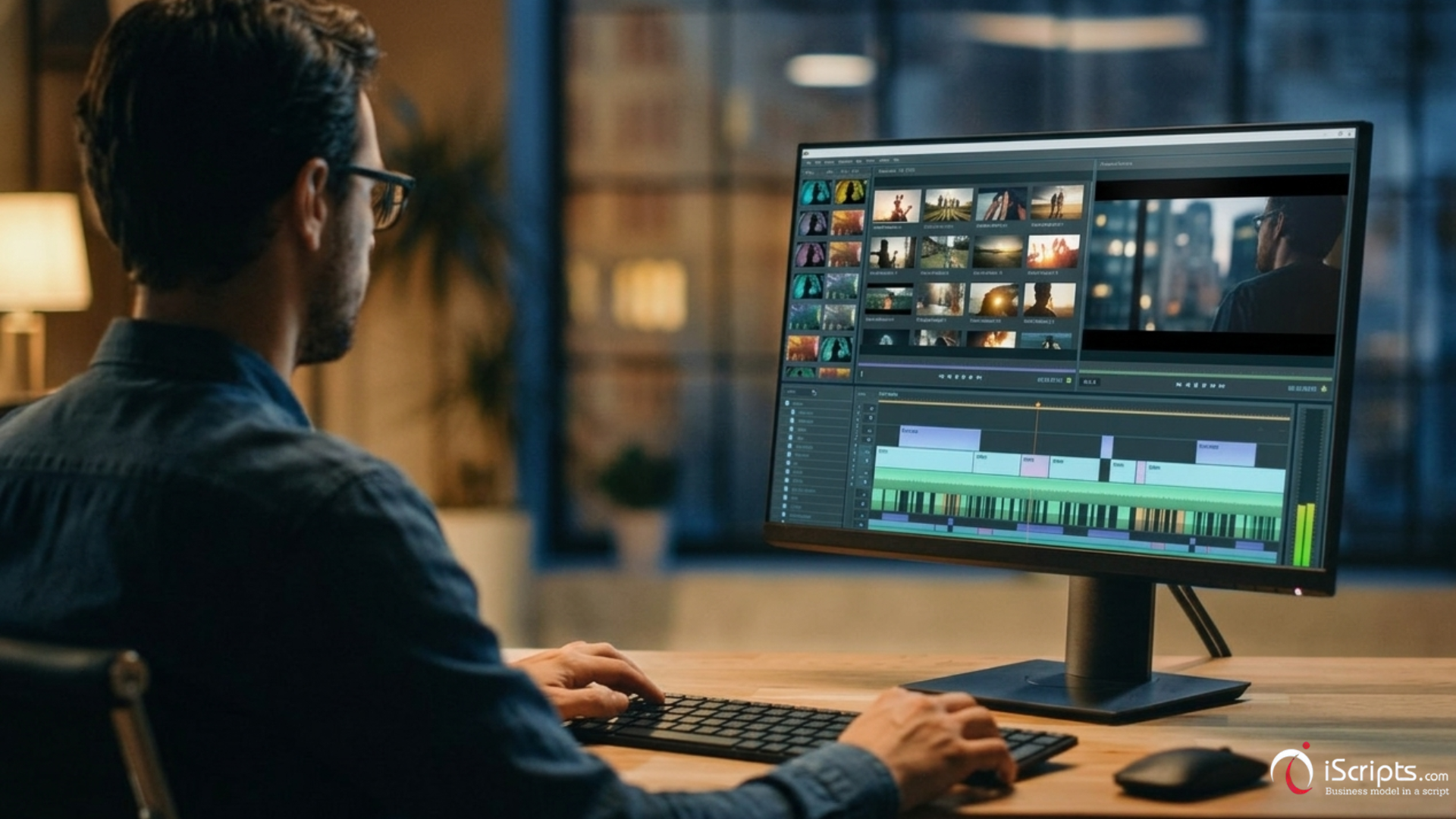
Video has become an integral part of the digital communication system we rely on in our day-to-day lives. Video is increasingly becoming a preferred mode of interaction for social media, educational tutorials, branding, and entertainment services. In the wake of this shift, there has been a rising need for software that would enable users to create and edit videos on the go from their mobile devices. However, developing such software can prove to be an extremely difficult task.
An operation such as cropping, editing, or rendering a video requires a combination of multiple technological processes in the background. It demands a high degree of expertise to integrate video rendering, storage, device compatibility, optimisation, and UX/UI design effectively.
This is why companies are leaning towards video editing SDKs, which assist them in creating advanced video editing capabilities quickly and efficiently.
Here, we will discuss some of the key challenges associated with video editing app development, along with effective strategies to address them.
The Hidden Complexity Behind Video Editing Apps
Upon initial inspection, the whole process seems to be pretty simple. The user needs to upload a video, edit it a bit, add some music or a few words and then export the result.
However, there is more happening behind the scenes. It has to decode videos, work on frames of the videos, sync the audio and even create previews. It is necessary for all this to occur swiftly without any user interruptions. This is why mobile video editing apps are among the most complex types of mobile applications to develop.
Performance Challenges: Why Video Processing Is So Demanding
Performance is one of the most pressing issues in any video editor application. Videos are quite heavy, and any operation, whether it be cutting, cropping, merging, adding effects, and many others, involves processing thousands of video frames in real-time.
Failure to optimise leads to poor performance, lag, overheated phones, crashing applications, and other issues. It poses an even more significant problem for old smartphones or budget gadgets, which have weaker hardware compared to today’s models.
This means that developers have to incorporate some intelligent performance solutions, such as GPU rendering, background rendering, and media management systems. Rather than burdening the phone’s CPU with all the work, video editors utilise smart methods to render content efficiently and provide fast performance.
Designing an Editing Experience Users Actually Enjoy
Technical excellence is vital; equally vital is user experience. Nobody wants to be faced with a needlessly complex editing process. Users will be expecting their video editor application to have an intuitive user interface. Confusing timelines, tricky controls and lagging editing can all lead to uninstallation.
A good video editor application should allow for complicated edits with simplicity. Features like drag-and-drop timelines, real-time preview capability, touchscreen-friendly control, and sleek interface design matter greatly when it comes to retaining users. The best editing applications strip away the complications in the editing process, even when the technical aspects involved are highly complex.
Device Compatibility: The Challenge of Building for Everyone
Among other factors, it is important to note that mobile phones are different from each other. While an editing tool functions seamlessly on one phone, it might face some difficulties when running on another due to variations in RAM, operating system, processor, or screen size, for example. Such inconsistencies usually arise when developing applications for Android, as device fragmentation issues are far more pronounced there.
When developing software, one needs to create adaptable interfaces and modify application behaviour according to device requirements. This can be rather challenging.
Managing Large Video Files Without Slowing Down the App
However, today’s smartphones capture videos in extremely high resolutions- either Full HD or 4K. Although this results in higher quality videos for users, the developers face quite some difficulties because of the sheer file size. Storage requirements become very large, and loading and exporting can become problematic due to the large files that are difficult to process on mobile devices.
One way out of this problem is the use of proxy editing. In this method, a reduced resolution copy of the video is made to facilitate the editing process while keeping the actual high resolution file for later exportation. Other techniques include efficient compression and caching. Video compression is important to ensure that file sizes are reduced to improve efficiency in video editing. Caching involves storing information that is frequently accessed, thus improving video loading and previewing processes.
Why Real-Time Effects and Filters Are Hard to Build
Another reason people tend to download editing applications is to get their hands on creative features such as filters, transitions, overlays, and visual effects. These add to the attractiveness of the content but are among some of the most challenging to develop. In real-time rendering, the app must perform visual alterations instantly without compromising the smoothness of the playback.
Some of the most popular features in an editing application include:
- Cinematic Filters
- Text overlays that animate
- Transitions between clips
- Sticker/motion graphics
- Beauty Filters
Creating them from scratch involves spending a lot of development time. With the help of the editing Software Development Kit, this is minimised to a great extent.
Exporting Videos for Multiple Platforms
Exporting could be thought to be the last thing you do, but sometimes it is another source of technical issues. The video editor does not just aim at saving the video but ensuring it is well exported to the intended site such as YouTube, Instagram Reels, TikTok or WhatsApp.
Different sites require a specific file size, aspect ratio, and resolution which is only achieved through optimising exports. A wrongly exported video could appear blurry and may even fail to be uploaded. Fortunately, the recent software takes care of this problem by providing platform-specific export formats.
Audio Editing: The Often-Overlooked Feature
The process of video editing is not only concerned with the visual aspects. Audio elements have an important part to play in the perception of the content. It is becoming common for people to include musical elements, provide voiceovers, edit their audio files, and synchronise the audio with video sequences.
If the editing program does not provide strong capabilities for manipulating audio data, it will be regarded as incomplete software. A professional approach towards audio manipulation will involve such features as changing volume levels, cross-fading between tracks, and aligning sounds by means of waveform displays.
Security and Content Protection Matter
The use of video apps is increasing as more people and organisations begin to depend on them. There is a need to protect such content against any unauthorised use, copying, or stealing. The need is even more crucial for companies that create branded content.
There are some key elements that ensure protection, which make the platform better. This includes:
- Watermarking
- Secure Storage
- Permissions
- Encryption of upload/download data
Why Businesses Choose Ready-Made Solutions Like EditPrime
Creating an editing engine from scratch is going to take a lot of time- years, actually. It needs a specialised development team, lots of tests, and further maintenance. This solution is simply not affordable for most companies, which is why off-the-shelf solutions like EditPrime have become increasingly popular.
EditPrime
By adopting such an approach, businesses save the time necessary to build a basic functionality and are able to concentrate on expanding their business, creating a brand, and enhancing the user experience. There are plenty of reasons for choosing an off-the-shelf solution, including but not limited to:
- Time-Saving
- Cost-Effectiveness
- Low technical risks
- Ease of scaling
- Fast deployment of new functionality
Conclusion
Creating an application for video editing is arguably the most difficult thing to do in mobile software development- it’s also one of the most fulfilling. Modern consumers want to have speed, convenience, innovation, and dependability in a single piece of software. Accomplishing this goal will entail overcoming obstacles in terms of performance, usability, interoperability, storage capacity, and scalability.
Fortunately for developers, there’s no need to reinvent the wheel. Using tools like EditPrime, companies can expedite their development process and create impressive video editing applications much more quickly. The reason? Consumers don’t care about the technology that powers your software. They simply care about how easy it was to create their masterpiece.
Experience iScripts EditPrime in motion. Request a demo of iScripts EditPrime right now.

