
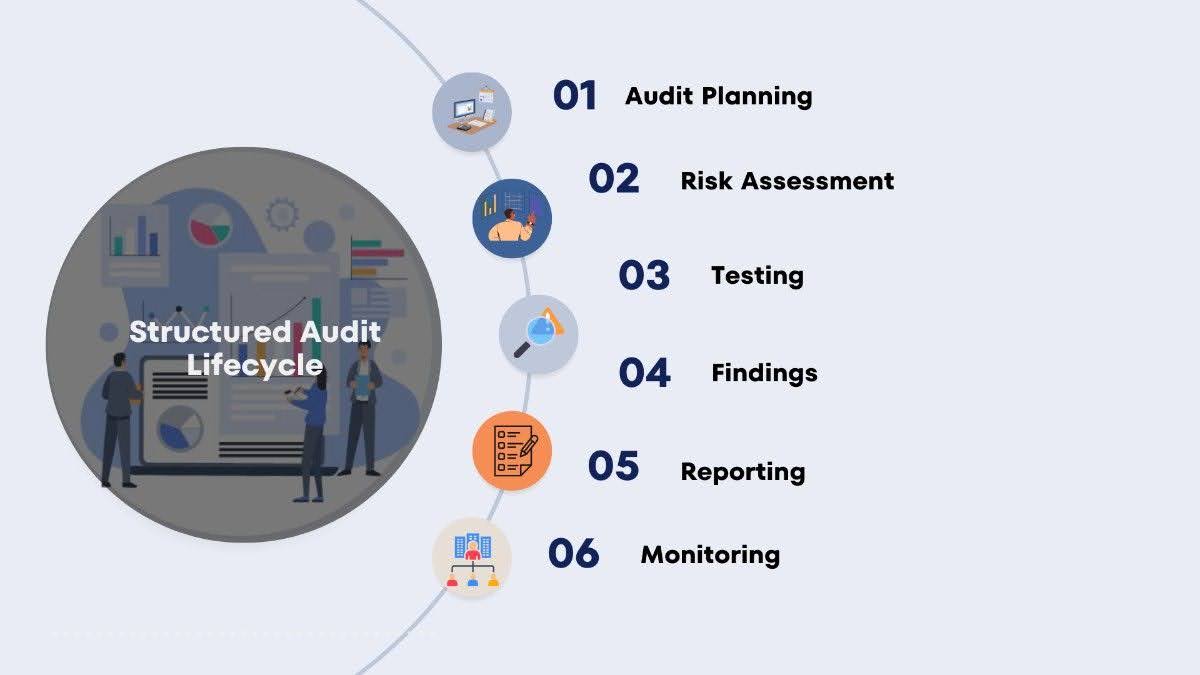
Audits usually fail from weak execution, fragmented oversight, and delayed visibility into risk. As regulatory pressure intensifies and operations expand across geographies, manual audit tracking introduces exposure that leadership cannot afford.
For business decision makers, selecting an audit management system is not an IT purchase. It is a governance decision that directly affects financial reporting integrity, regulatory posture, and operational resilience. A capable platform shifts audit from reactive compliance to structured risk management and strategic insight.
Below are the features that materially impact audit performance and executive oversight.
1. Centralized Audit Planning and Risk Based Prioritization
An Audit function starts with risk driven planning. The system should support formal annual audit planning linked to enterprise risk assessments and be able to prioritize audits based on financial impact, regulatory exposure, operational complexity, and historical findings.
2. Structured Risk Assessment and Control Mapping
An audit platform must connect risks, controls, and testing procedures in a structured hierarchy. Configurable risk scoring models should allow parameters such as likelihood, impact, and control effectiveness to drive prioritization.
Control mapping should surface gaps, redundancies, and ineffective defenses. When risks and controls are clearly linked to audit procedures, audits become validation mechanisms for risk mitigation strategy rather than administrative tasks.
Scenario analysis capabilities enable leaders to simulate risk exposures and adjust audit focus as emerging threats change business priorities.
Effective Resource allocation with visibility including capacity planning and timeline forecasting prevents bottlenecks and ensures audit coverage aligns with business critical functions rather than departmental convenience.
3. Workflow Automation with Accountability Controls
The system should provide role-based task assignments, automated reminders, approvals, and escalation protocols. These features create accountability and shorten audit cycles.
Configurable approval hierarchies enforce governance standards, while real time status dashboards allow audit heads and executives to monitor progress without manual reporting.
4. Standardized Workpapers and Evidence Integrity
High quality audit outcomes depend on consistent evidence and documentation. The platform should offer standardized templates, structured workpapers, and secure storage with version control.
Every update must be traceable with user attribution and timestamping. This level of documentation integrity is essential for internal quality assurance, external audits, and regulatory inspections where defensibility and transparency matter most.
5. Continuous Monitoring and Real Time Reporting
Modern audits extend beyond periodic reviews. A capable system should support ongoing issue tracking and continuous monitoring where relevant. Real time dashboards must present key metrics by severity, remediation timelines, control effectiveness, and trend analysis.
Risk heatmaps and issue aging reports highlight systemic weaknesses and accelerate decision making at executive and board levels.
6. Regulatory and Framework Alignment
Organizations often operate under multiple regulations depending on industry and geography. The system should support configurable frameworks and enable direct mapping of controls and findings to applicable standards.
Maintaining up to date compliance checklists ensures readiness for regulatory audits and reduces duplication of effort. This adaptability is critical in fast changing regulatory environments.
System integration reduces resolution friction, improves data accuracy, and ensures customer context is available at every interaction point.
7. Integration with Core Business Systems
Audit effectiveness increases when systems integrate with operational data sources. Connectivity with ERP, finance, procurement, HR, and risk systems reduces manual data entry, enhances accuracy, and enables analytics driven auditing.
8. Enterprise Grade Security and Segregation of Duties
Audit systems contain sensitive financial and operational data. The platform must enforce granular role based access, encryption at rest and in transit, and strict segregation of duties to prevent unauthorized manipulation.
9. Scalability Across Entities and Geographies
As organizations grow through acquisition or diversification, audit complexity increases. The platform must support multiple entities, currencies, reporting structures, and regulatory environments without performance degradation.
Configurable workflows and reporting hierarchies enable localized compliance while preserving centralized governance standards.
10. Implementation Efficiency and Total Cost of Ownership
Deployment timelines, onboarding processes, and ongoing support directly affect operational continuity. The system should offer structured implementation support, clear training pathways, and predictable upgrade cycles.
Decision makers should assess total cost of ownership by factoring in licensing, integrations, customization, internal training, and maintenance. A reliable vendor with domain expertise reduces risk and accelerates value realization.
Turning Audit into a Strategic Advantage
An audit management system is a strategic control infrastructure that shapes how risk is identified, evaluated, and resolved. When selected and implemented with clear objectives, it enhances transparency, shortens remediation cycles, and equips leadership with reliable risk intelligence.
A centralized audit system improves visibility into recurring control failures, overdue remediation, and risk concentration across business units. Consolidated reporting enables leadership to identify patterns, allocate resources based on exposure, and enforce accountability through measurable remediation timelines. Structured oversight reduces dependency on manual tracking and strengthens governance consistency across the organization.
Organizations evaluating modern platforms should prioritize solutions that unify planning, execution, documentation, and reporting within a structured governance framework. Solutions such as iScripts AuditPrime illustrate how integrated workflows and centralized oversight strengthen accountability across the audit lifecycle. A closer look at how iScripts AuditPrime modernizes audit management highlights how structured planning, automated task tracking, and real time dashboards can improve both compliance visibility and operational control.
