
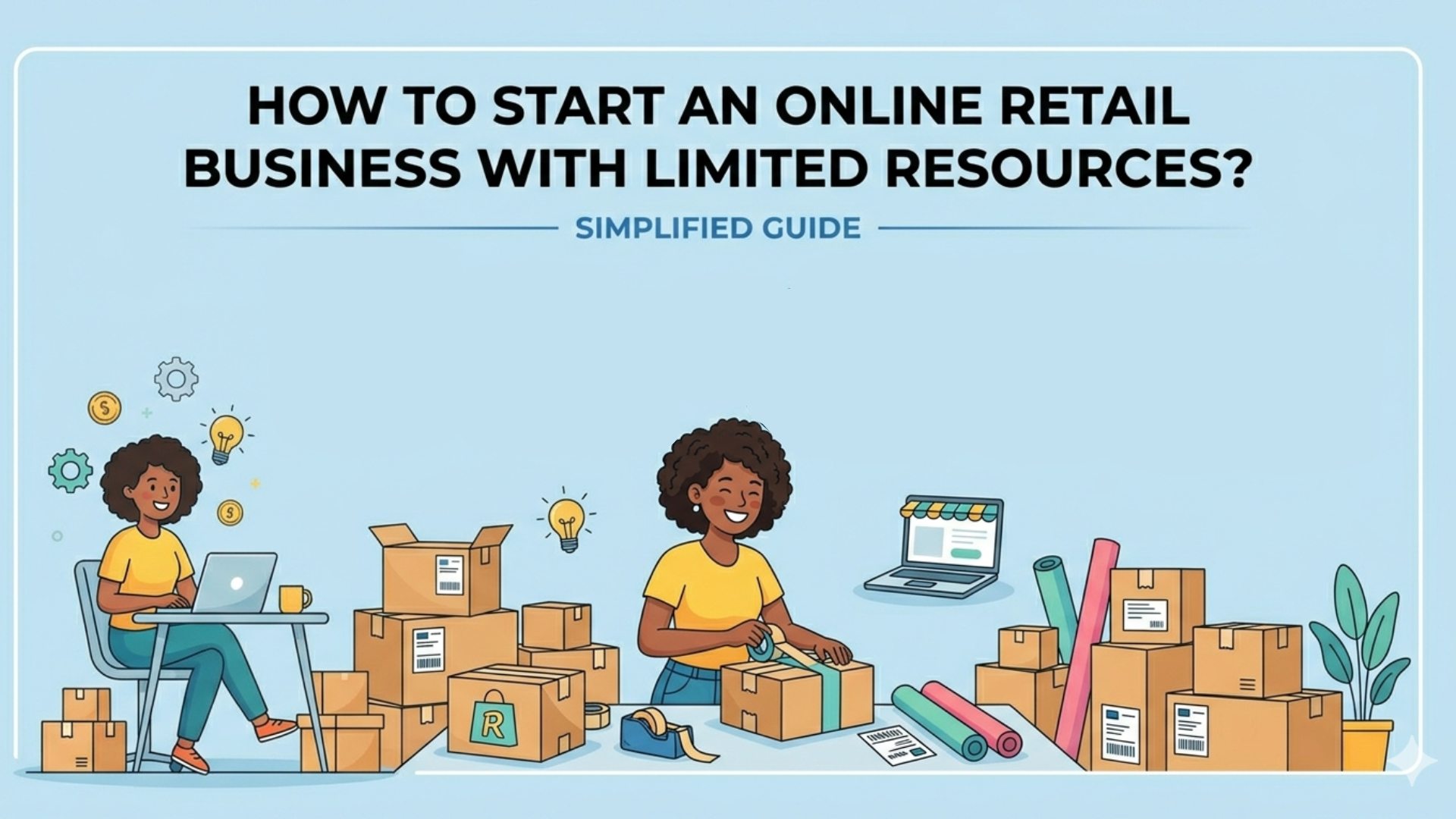
Home Blog Home Customer How to Start an Online Retail Business with Limited Resources?

How to Start an Online Retail Business with Limited Resources?

by Sherine Mariam
How to Start an Online Retail Business with Limited Resources

1. Introduction: Starting an Online Business Without Big Investment

Starting an online retail business has become easier than ever before. The rapid growth of online shopping has opened many opportunities for people who want to start a business without spending a large amount of money. Today, you don’t need a physical store or a huge investment to begin selling products online. Affordable tools, digital platforms, and social media make it possible for entrepreneurs to launch and manage a business with limited resources. In this guide, you will learn how to start an online retail business step by step, choose the right business model, and grow successfully even with a small budget.

An online retail business is simply a business where products are sold to customers through the internet instead of a physical shop. There are several online retail models that beginners can choose from depending on their budget and resources :

  1. Dropshipping allows you to sell products without keeping inventory, as suppliers ship items directly to customers.
  2. Print-on-demand lets you sell customized products like t-shirts or mugs that are produced only after an order is placed.
  3. Inventory-based selling involves buying products in small quantities and storing them yourself
  4. Marketplace selling means selling through platforms like online marketplaces that already have customers. Choosing the right model depends on your budget, business goals, and how much control you want over products and operations.

 2. Find a Profitable Niche

Choosing the right niche is one of the most important steps when starting an online retail business. A niche helps you focus on a specific group of customers instead of trying to sell everything to everyone. Successful businesses usually solve a particular customer problem or meet a specific need, such as affordable fitness products, eco-friendly items, or personalized gifts. Before selecting a niche, it is important to research market demand to understand what customers are actively searching for and buying online. At the same time, avoid markets that are already overcrowded with too many competitors. Clearly identifying your target audience including their interests, needs, and buying behavior helps you create products and marketing strategies that connect with the right customers.

Before investing too much money, it is important to test whether your business idea actually works. Start by researching competitors to understand what they sell, how they price their products, and what customers like or dislike about them. You can test product demand by listing a product online, running small promotions, or accepting pre-orders before purchasing large amounts of inventory. Social media platforms are also useful for gathering feedback, as potential customers can share opinions and show interest in your products. Creating a minimum viable product (MVP) – a simple version of your product or store allows you to launch quickly, learn from real customer responses, and improve your business while keeping costs low.

3. Create a Business Plan on a Budget

Starting an online retail business does not require a complicated or expensive business plan. A simple and clear plan helps you stay organized, manage costs, and grow step by step while using limited resources.

– Define Goals and Revenue Model

  • Set clear business goals and expectations
  • Decide how your business will make money
  • Identify your target customers
  • Choose products that match market demand

– Plan Your Pricing Strategy

  • Price products competitively
  • Include product cost, shipping, and platform fees
  • Maintain a healthy profit margin
  • Offer discounts or bundles to attract buyers

– Cost Planning and Startup Roadmap

  • List essential startup expenses
  • Avoid unnecessary spending in the beginning
  • Start small and scale gradually
  • Create a simple step-by-step launch plan

4. Steps to Launch Your Online Retail Business on a Budget

– Choose Low-Cost Selling Platforms

  • Sell through marketplaces like Amazon or Etsy
  • Use social commerce platforms such as Instagram or Facebook Shops
  • Build your own website for brand control
  • Compare free and paid ecommerce tools before investing

– Build Your Online Store with Minimal Cost

  • Choose a simple and memorable domain name
  • Use affordable hosting services
  • Select easy website builders with ready templates
  • Ensure your store is mobile-friendly
  • Create essential pages like Home, Products, About, and Contact

– Source Products Without Large Inventory

  • Work with dropshipping suppliers
  • Partner with local vendors or manufacturers
  • Use print-on-demand services for customized products
  • Purchase small batches to reduce risk
  • Accept pre-orders to test demand before stocking products

– Set Up Secure Payments and Checkout
Dropshipping Business Model - iScripts

  • Choose reliable payment gateways
  • Accept multiple payment methods for customer convenience
  • Build trust with secure payment options
  • Keep checkout simple and fast to reduce cart abandonment

– Apply Low-Budget Marketing Strategies

  • Promote products through social media marketing
  • Create helpful content to attract customers
  • Use basic SEO techniques to improve visibility
  • Collaborate with influencers or creators
  • Build an email list for promotions
  • Encourage referrals from satisfied customers

– Manage Orders and Customer Service Efficiently

  • Automate order processing where possible
  • Track inventory to avoid stock issues
  • Create a clear return and refund process
  • Use communication tools to respond quickly to customers

– Utilize Free Tools to Save Money

  • Use free design tools for branding and visuals
  • Track performance with free analytics tools
  • Use free marketing platforms to promote products
  • Automate repetitive tasks using available online tools

 5. Common Mistakes to Avoid When Starting Small

Many beginners make the mistake of overspending too early in their business journey. Investing heavily in advanced tools, large inventory, or expensive marketing before understanding customer demand can quickly drain your budget. It is better to start small, test your ideas, and gradually increase spending as sales grow.

Another common mistake is choosing too many products at the beginning. Trying to sell a wide range of items can make inventory management, marketing, and branding difficult. Focusing on a smaller product range allows you to understand customer preferences better and build a stronger identity for your store.

Some new business owners also make the error of ignoring branding. Even with a limited budget, having a consistent logo, store design, and brand message helps customers recognize and trust your business. Strong branding makes your store look professional and improves customer confidence.

Poor customer support can also harm a new online retail business. Slow responses, unclear return policies, or lack of communication can lead to negative reviews and lost customers. Providing quick responses and helpful service builds trust and encourages repeat purchases.

Finally, many startups struggle because of a lack of marketing strategy. Simply launching an online store is not enough,  customers need to know your business exists. Consistent promotion through social media, content marketing, and email campaigns helps attract visitors and turn them into loyal customers.

6. Scaling Your Online Retail Business Gradually

Reinvesting profits
When your online store starts making money, avoid spending all the profit immediately. Instead, use a portion of the earnings to improve your business. You can invest in better marketing, website upgrades, faster delivery options, or improved product quality. Reinvesting helps your business grow steadily without taking unnecessary financial risks.

Expanding product range
After understanding which products sell well, you can slowly introduce new items related to your existing products. Expanding gradually helps you test demand without overwhelming your operations. Adding complementary products also encourages customers to buy more from your store.

Building brand loyalty
Long-term success depends on loyal customers. Provide good product quality, quick support, and a smooth buying experience. Offering discounts, reward programs, or personalized communication can encourage customers to return and recommend your brand to others.

Moving from marketplaces to your own store
Many online sellers begin on marketplaces because they are easy to start with. As your business grows, creating your own online store gives you more control over branding, customer data, and profit margins. Gradually shifting customers to your own platform helps build a stronger independent business.

7. Future Trends in Online Retail

  • Mobile commerce growth
    More people are shopping using smartphones instead of desktop computers. Online stores must focus on mobile-friendly websites, fast loading speed, and simple checkout experiences to meet customer expectations.
  • AI personalization
    Artificial intelligence is helping online stores recommend products based on customer behavior and preferences. Personalized product suggestions, automated chat support, and smart marketing campaigns improve customer experience and increase sales.
  • Social commerce expansion
    Social media platforms are becoming powerful selling channels. Customers now discover and buy products directly through social media apps. Businesses that actively engage with customers through social content, influencers, and live selling gain a competitive advantage.
  • Subscription retail
    Subscription-based selling is growing rapidly. Instead of one-time purchases, customers subscribe to receive products regularly, such as monthly boxes or recurring essentials. This model provides convenience for customers and predictable revenue for businesses.

8. Conclusion: Start Small, Grow Smart

Starting an online retail business does not require a huge investment or complicated setup. Many successful businesses began with small ideas and simple resources. What matters most is taking action and learning step by step.

You don’t need big capital to begin. Start with products you understand, use free or affordable tools, and grow based on real customer demand. Small and steady progress is often more successful than rushing into large investments.

Consistency is more powerful than spending a lot of money at the start. Regular marketing, good customer service, and continuous improvement help build trust and long-term success. Even small daily efforts can lead to strong business growth over time.

The most important step is simply getting started. Every successful online store once began as an idea. Take your first step today, test your strategy, learn from experience, and grow your business smartly.

Ready to start your online retail journey?

Start an Online Business - iScriptsBegin small, stay consistent, and build your online store today – your future business starts with one simple step.


iScripts UberforX Live Demo

Leave a Comment
